
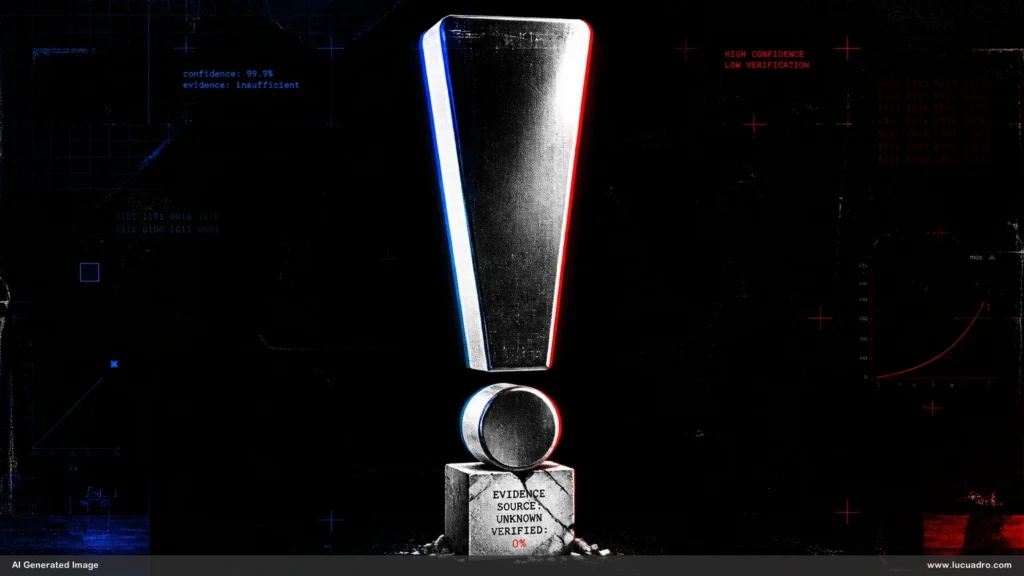
Why AI can sound certain when it is completely wrong comes down to a mismatch between how convincing an answer looks and how that answer is produced. You see complete sentences, precise terminology, clean explanations, and sometimes specific details that create the impression of knowledge. Yet none of those signals guarantees that the underlying claim is true. For anyone using AI to create, research, plan, or communicate, that gap is basic AI literacy.
AI confidence is a writing signal, not a truth signal
Human communication trains you to associate confident language with confidence in the speaker’s knowledge. AI breaks that shortcut. A generated answer can use decisive wording because decisive wording fits the context, not because the system has independently established the claim. The fluency is real. The implied certainty may not be. This distinction matters because polished language can make weak information feel stronger than a hesitant but accurate human answer.
The safest mental model is to separate presentation quality from factual reliability. Grammar, structure, tone, and specificity tell you something about the quality of the generated response as communication. They do not tell you whether a date, quotation, statistic, explanation, source, or causal claim has been verified. Treating those as separate dimensions removes much of the false authority that fluent AI output can create.
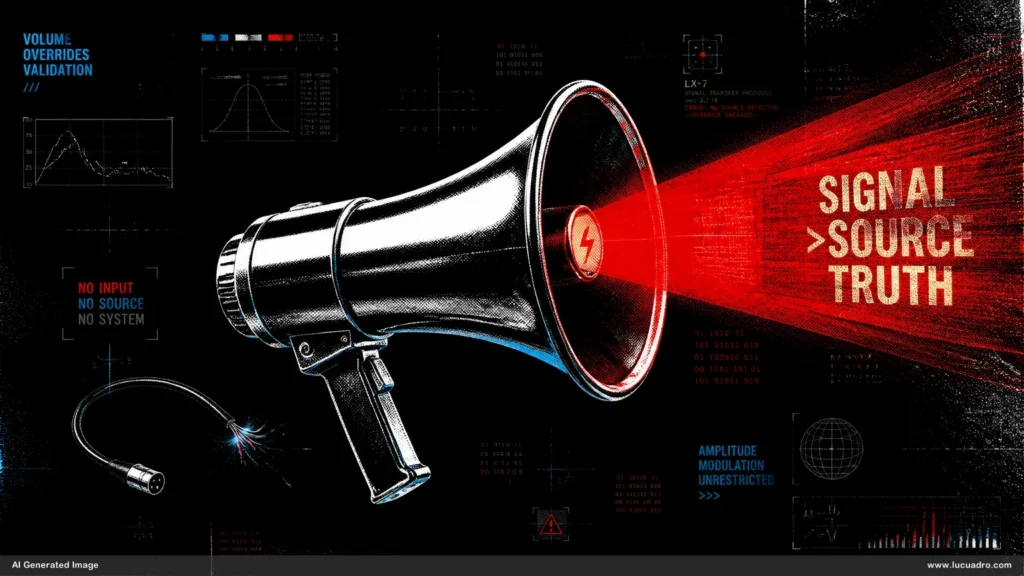
Why AI hallucinations can look unusually believable
AI systems are exceptionally good at patterns. When an answer needs a publication title, technical explanation, plausible citation, or missing detail, the surrounding context provides strong patterns for what such information should look like. That ability is useful when you want coherent writing or structured material. It becomes dangerous when something that merely fits the pattern is mistaken for something established in reality.
This is why an AI hallucination is not always absurd. The harder cases are internally coherent. A nonexistent report may have a plausible institutional title. An incorrect explanation may use the right vocabulary. A fabricated detail may fit everything around it. The error survives casual inspection precisely because the model can produce the form of a credible answer even when one of its factual components is wrong.
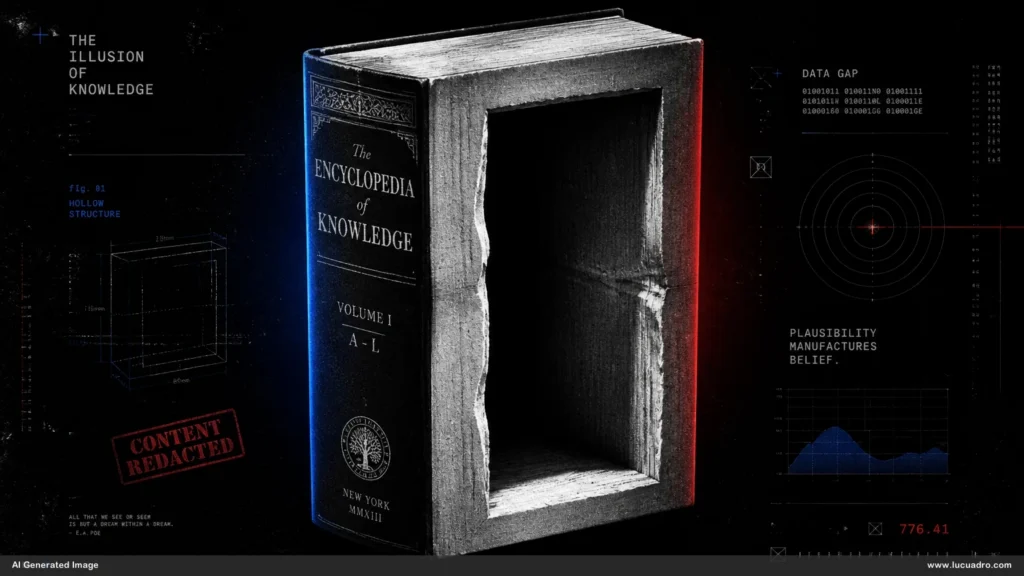
Specific details can make wrong AI answers more persuasive
Specificity normally increases credibility. Exact numbers, names, dates, quotations, and step-by-step explanations feel more trustworthy than vague statements. With AI, specificity deserves the opposite reaction when the information matters. The more consequential and externally checkable the detail, the stronger the case for checking it against a source. A precise answer is easier to verify, but precision itself is not verification.
This creates a useful decision rule for AI-powered content creation systems: identify the claims that would damage the work if they were false. Verify those claims first. A decorative wording choice requires little scrutiny. A statistic in a client presentation, a quotation in an article, a technical specification in training material, or a factual claim supporting a business decision deserves substantially more. Verification effort should follow the cost of being wrong.
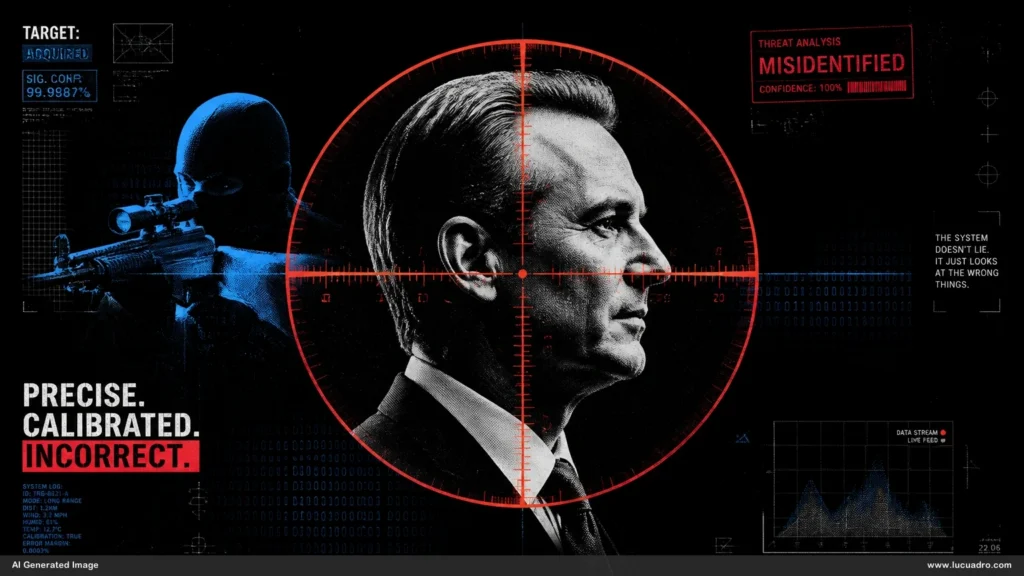
Basic AI literacy means knowing what needs verification
You do not need to distrust every generated sentence. That would erase much of AI’s practical value. The better approach is to distinguish tasks where pattern generation is the product from tasks where correspondence with reality is essential. Rewriting rough notes, reorganizing information you supplied, generating alternatives, extracting structure, and adapting material are fundamentally different from asking for an unknown historical fact or an unsupported external claim.
The distinction becomes especially useful in visual work. AI can help reorganize a concept, propose compositions, modify supplied material, or explore variations while you retain strong control over the inputs. The same principle applies to text: stronger source material and clearer constraints reduce how much the system must invent. This is one reason reference-driven workflows and reference images for AI image generation are so valuable in creative production.
The best AI workflows separate generation from verification
A productive workflow does not demand that one AI response perform every function at once. Use generation for what generation does well: synthesis, transformation, pattern recognition, alternatives, organization, and rapid iteration. Use authoritative sources, source documents, calculations, tests, or human review for claims where reality has the final word. That separation lets you use AI aggressively without granting its prose automatic authority.
It also changes prompting. Instead of asking the system to produce a finished answer from nothing, provide source material when possible and define what may be inferred. Ask it to distinguish supplied facts from assumptions. Request uncertainty where the evidence is incomplete. For creative work, the equivalent is supplying references and separable inputs rather than relying on an unconstrained generation. The principle behind art direction and AI image generation applies equally well to information: control the inputs that matter.
Understanding why AI can sound certain when it is completely wrong does not make AI less useful. It makes your use of it more precise. Fluency can be exploited for drafting, restructuring, synthesis, and exploration while verification is reserved for claims whose truth matters.