
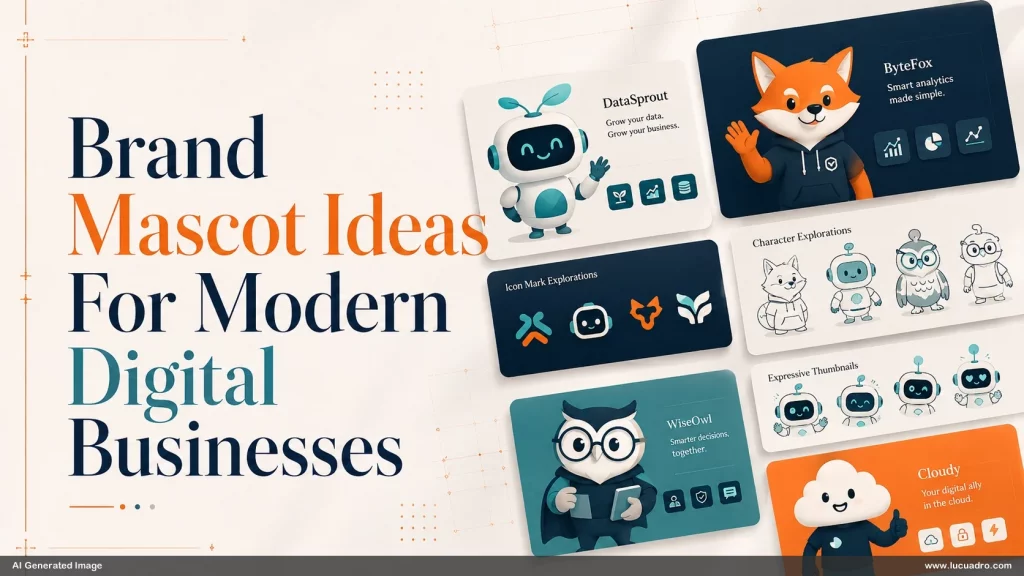
Brand Mascot Ideas For Modern Digital Businesses matters because professional content is judged before every detail is read. Presentations, websites, training materials, social posts, and marketing assets all need visual structure that helps people understand the message quickly. When the structure is weak, even valuable information can feel generic, scattered, or difficult to trust. The right design asset gives the creator a stronger starting point and reduces the friction between idea and finished visual communication.
Brand Mascot Ideas For Modern Digital Businesses solves a recurring content problem
Most creators do not struggle because they lack ideas. They struggle because every project creates the same visual decisions again. The layout must be chosen, the hierarchy must be built, the visual style must be matched, and the content must be arranged so the audience can follow it. Without a reusable system, these decisions repeat endlessly across every new presentation, page, post, or campaign.
This is where brand mascot ideas become useful. They provide a proven structure for a problem that appears again and again. Instead of starting from a blank page, the creator begins with a visual framework that already supports the communication goal. The work becomes adaptation rather than reinvention.
Better assets create clearer communication
Good design assets are not decorative extras. They are communication tools. A slide layout guides attention. A diagram reveals relationships. A mockup makes an invisible product tangible. A character creates continuity. A visual system makes separate pieces of content feel connected. These assets help the audience understand what matters faster.
When visual structure is handled well, the message feels easier to process. The viewer spends less time decoding the design and more time understanding the idea. That is why strong assets often improve the quality of communication more than random decoration or last-minute visual polish.
Reusable systems save time without making content generic
One common fear is that templates and asset libraries make content look repetitive. In practice, the opposite can happen when the system is designed well. The structure stays consistent, but the message, examples, topic, and audience remain specific. This creates speed without sacrificing relevance.
A reusable asset library gives creators a set of visual starting points. They can choose the right structure, adapt it to the project, and maintain a professional standard across multiple outputs. For related resources, explore [INTERNAL LINK: brand mascot ideas | design asset library].
Design asset stores should organize assets around real use cases
The strongest asset libraries are not organized only by file type. They are organized around the problems people need to solve. A business professional may need to explain a strategy. A trainer may need to teach a process. A creator may need to package a digital product. A marketer may need to turn expertise into content.
When assets are grouped around these use cases, they become easier to apply. The user does not just download a file. They find a visual solution for a communication problem. Explore related examples in [INTERNAL LINK: visual communication assets | business design resources].
The best assets become part of the workflow
The real value of brand mascot ideas appears when they are used repeatedly. Each asset becomes part of a broader content creation workflow. Instead of solving the same visual problem again, the creator can focus on stronger ideas, better examples, clearer messages, and more useful content.
Brand Mascot Ideas For Modern Digital Businesses works best when it connects design quality with practical production speed. The asset helps content move from scattered ideas to professional output faster. For a design asset store, this is the core promise: reusable visual systems that make business communication clearer, more consistent, and easier to create.