
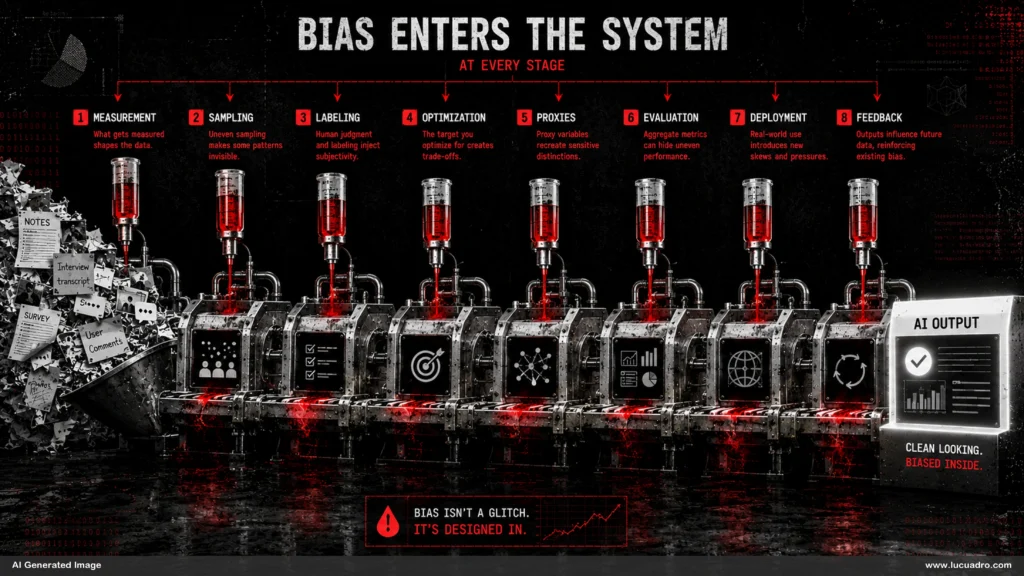
How bias gets into an AI system is not explained by one bad dataset or one faulty decision. Bias can enter at several stages: what data is collected, how categories are defined, which examples are missing, what objectives the system is optimized for, how outputs are evaluated, and how people use the result. Understanding those entry points makes bias easier to inspect because it turns an abstract problem into a series of concrete design choices.
Bias can begin with what gets measured
Every dataset reflects decisions about what counts as relevant information. Some behaviors are easy to record. Others are difficult, expensive, private, or never captured at all. That means the available data can represent part of reality more strongly than another part.
If a system is trained on what is easiest to observe, it may learn patterns that are accurate for the recorded sample but weaker for situations that were underrepresented. The bias begins before model training because the measurement process has already shaped the evidence.
Sampling determines which patterns become visible
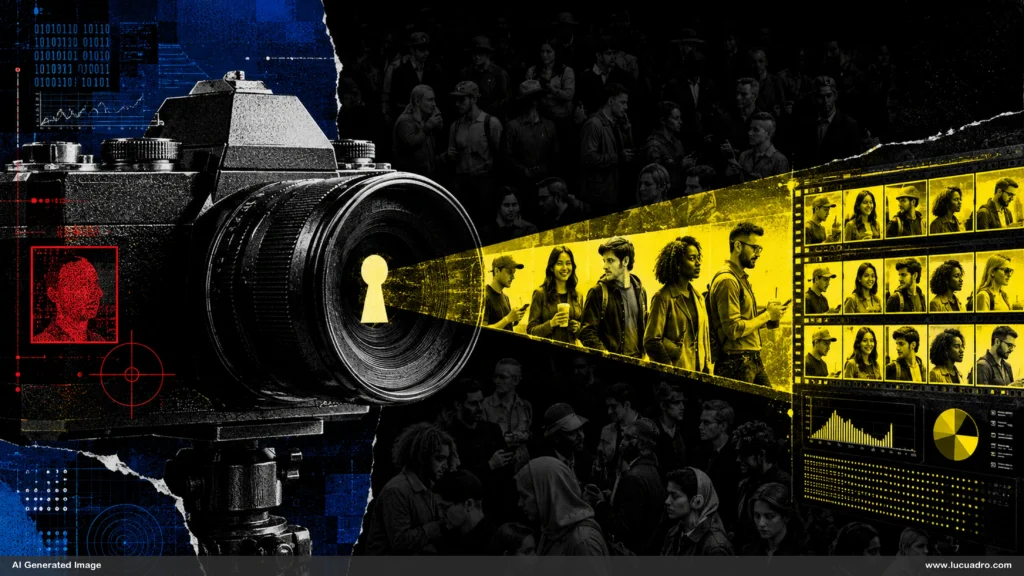
A dataset can be large and still be unbalanced. If some groups, situations, languages, locations, or edge cases appear far more often than others, the model receives stronger signals about the common cases.
That can produce uneven performance. The system may work well for the populations most heavily represented in training and less reliably for those that appear less often. More data does not automatically solve the problem if the additional data repeats the same imbalance.
Labels can carry human judgment into the system
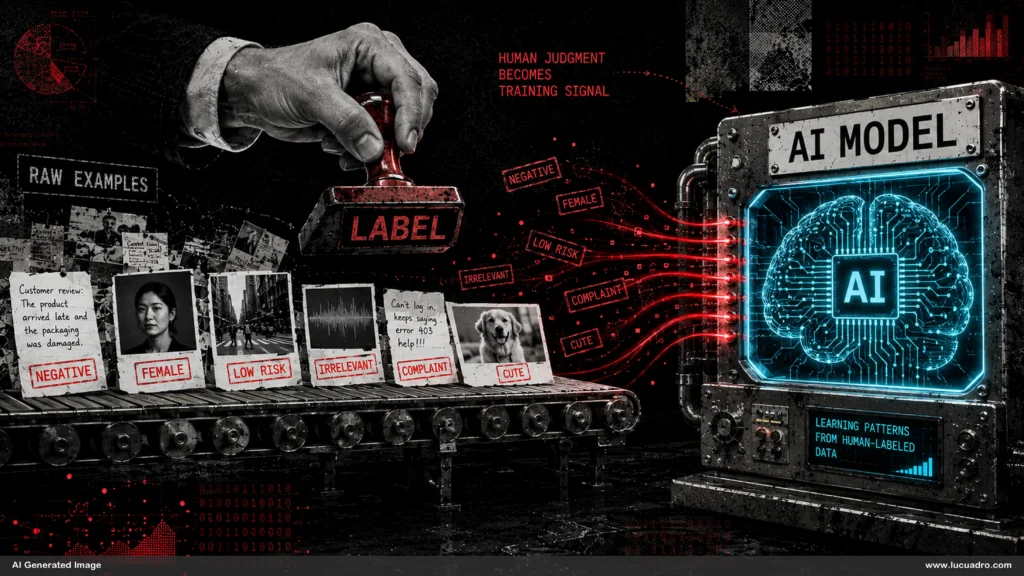
Many AI systems learn from examples that people have categorized, ranked, scored, or annotated. Those labels are not always objective. Two reviewers may disagree about whether a comment is offensive, whether an image is professional, or whether a response is helpful.
When subjective judgments become training labels, the model can learn the conventions and blind spots of the labeling process. The issue is not that human judgment should be removed. It is that human judgment needs to be recognized as part of the system.
Historical data can reproduce historical patterns
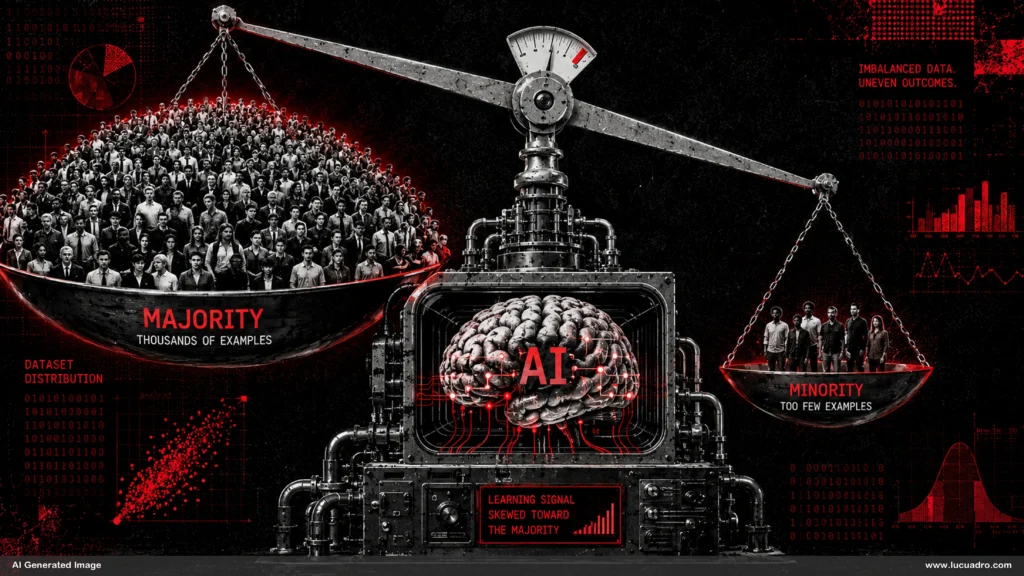
Training data often contains records of how people and institutions behaved in the past. If those historical outcomes were uneven, the model can learn the unevenness as a predictive pattern.
The model does not need to understand the social history behind the pattern. It only needs to detect that certain variables were associated with certain outcomes. Without additional constraints, historical regularity can be reproduced even when the goal is to improve on the historical process.
The target itself can create bias
AI systems are optimized for objectives chosen by people. A recommendation system might optimize engagement. A classifier might optimize overall accuracy. A support system might optimize response speed.
Those objectives create tradeoffs. Maximizing one metric can make another outcome worse. A model that performs well on average may still perform poorly for smaller subgroups. Bias can therefore emerge from what the system is asked to optimize, not only from the data it sees.
Proxy variables can recreate sensitive distinctions indirectly
Removing one obvious variable does not guarantee that the system stops using related information. Location, purchasing behavior, vocabulary, browsing patterns, education history, or other features can correlate with characteristics that were deliberately excluded.
The model may reconstruct a similar distinction indirectly because the proxy variables preserve much of the same statistical information. This is why bias testing has to examine outcomes, not just the list of input fields.
Evaluation can miss bias if the test set is too broad
A model can receive a strong overall score while performing unevenly across different groups or situations. Aggregate evaluation compresses those differences into one number.
This resembles the problem described in why a high benchmark score does not mean an AI is reliable. If you care about uneven performance, you have to measure the categories where unevenness might appear.
Deployment can introduce new bias after training
A model that behaves reasonably in testing can become biased in practice because of how it is deployed. Users may provide different kinds of input than the test set contained. One group may use the system more often. The output may influence future data collection and change the environment around the model.
That means bias is not fixed at the moment training ends. It can emerge through feedback loops, user behavior, product design, and the incentives created by the deployed system.
Bias cannot be reduced to one universal fairness rule
Different fairness goals can conflict. Equal error rates, equal access, equal outcomes, demographic parity, individual consistency, and historical correction are not always simultaneously achievable.
This is why bias work requires explicit choices. A team needs to define which harms matter, which groups or situations require examination, and which tradeoffs are acceptable. “Remove bias” is too vague to serve as an operational objective.
The strongest approach is to inspect the whole pipeline
Understanding how bias gets into an AI system means looking beyond the model itself. Inspect the measurement process, dataset composition, labels, target metric, proxy variables, evaluation slices, deployment environment, and feedback loops. Each stage can introduce or amplify unevenness.