
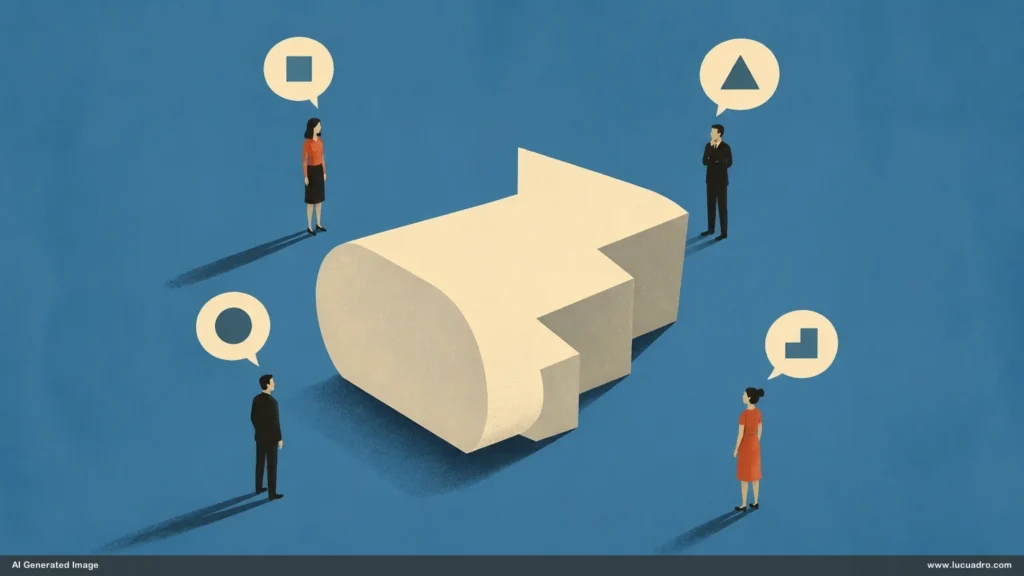
Why AI is so useful for exploring more than one point of view comes down to one practical advantage: it can generate several plausible framings of the same issue without requiring you to fully inhabit each one yourself. That makes it useful for testing assumptions, anticipating objections, comparing stakeholder priorities, and seeing how the same facts can be interpreted differently. The goal is not to treat every perspective as equally correct. It is to widen the frame before deciding which view is strongest.
One problem can look different depending on the observer
A product launch can look successful to the marketing team and risky to operations. A new policy can look efficient to management and burdensome to the people using it. A visual concept can look distinctive to a designer and confusing to a first-time viewer. These differences are not always contradictions. They often reflect different goals, incentives, constraints, and levels of information.
AI can help surface those differences quickly. You can ask how a customer, competitor, regulator, manager, beginner, expert, or skeptical reviewer might interpret the same situation. This makes it easier to see which parts of your own view are universal and which depend on where you are standing.
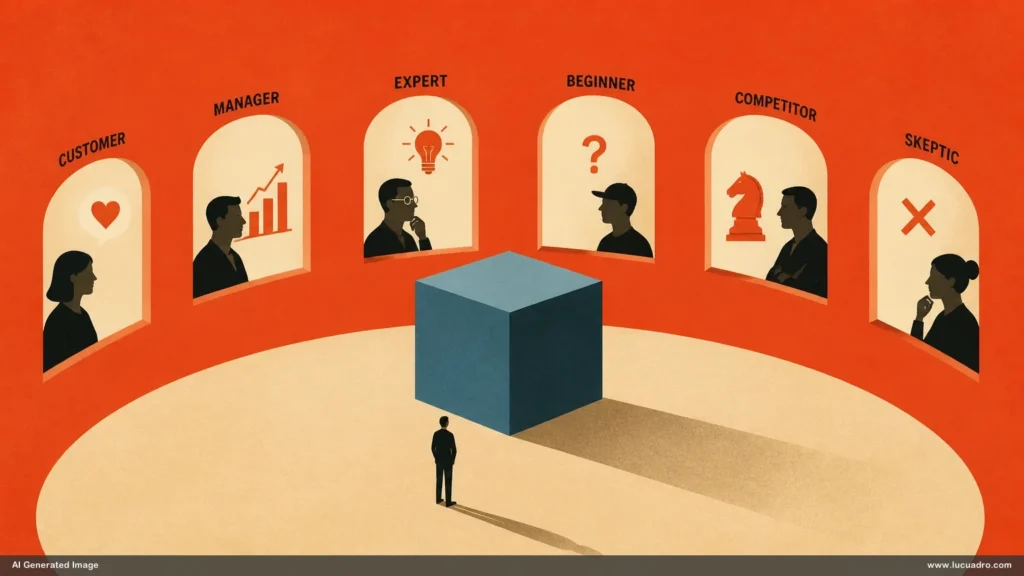
Perspective shifts can reveal assumptions you stopped noticing
Your own framing feels natural because you built it. That makes hidden assumptions difficult to detect. You may assume a feature is valuable because your team spent months building it. You may assume an explanation is clear because you already understand the topic. You may assume a visual hierarchy works because you know where the viewer is supposed to look.
Asking AI to examine the same material from another point of view can expose those assumptions. A skeptical buyer may care about proof rather than novelty. A beginner may stumble over terminology you consider obvious. A decision-maker may care less about process and more about risk. The perspective shift acts as a stress test for your original frame.
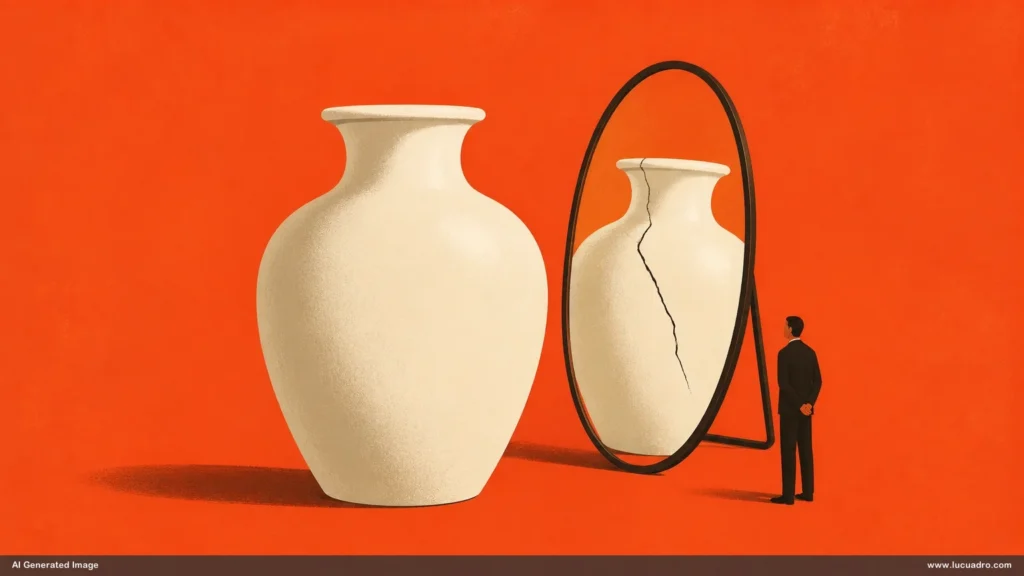
AI makes it cheap to explore opposing interpretations
People often avoid fully developing an opposing argument because doing so takes effort and can feel like weakening their own position. AI reduces that friction. You can ask it to construct the strongest reasonable case against a proposal, identify evidence that would support a different interpretation, or explain why an intelligent person might disagree.
This is useful because weak counterarguments tell you very little. Stronger opposing interpretations reveal where the real disagreement sits. Sometimes the issue is evidence. Sometimes it is priorities. Sometimes both sides accept the same facts but weight the consequences differently. AI can help separate those possibilities before the discussion becomes personal or vague.
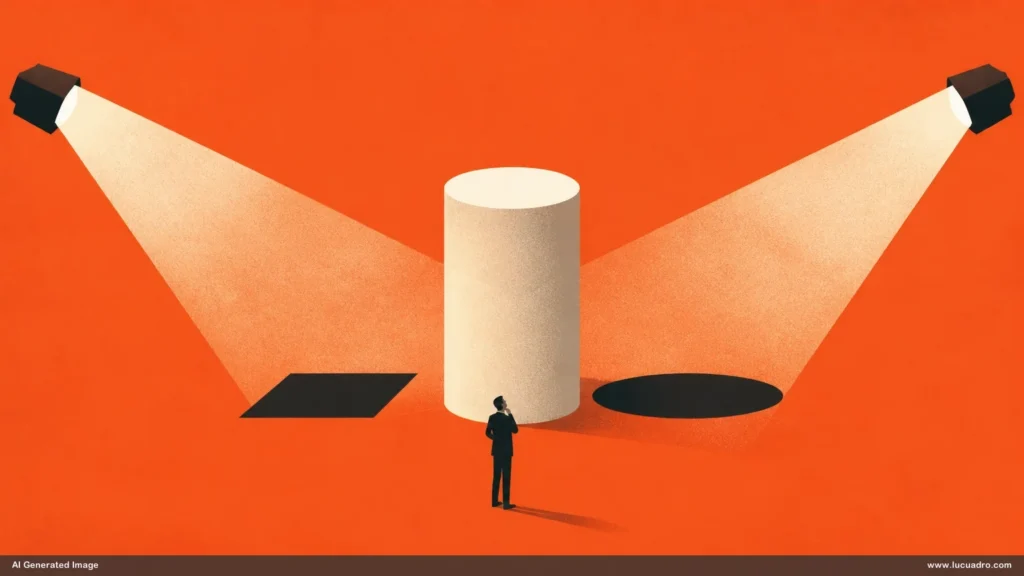
Multiple viewpoints improve decisions when stakeholders want different things
Many practical decisions involve groups with different incentives. A customer wants simplicity, a finance team wants efficiency, a designer wants coherence, and a sales team wants flexibility. If you reason from only one position, the final solution may work beautifully for one group while creating problems elsewhere.
AI can help build a stakeholder map and compare how each option affects different groups. This connects to using AI to compare large amounts of information. Once each perspective is made explicit, the model can organize recurring concerns, conflicting priorities, and shared interests into a clearer decision structure.
Different viewpoints are especially useful during idea development
Perspective exploration is not only for conflict or criticism. It can improve creative work. A campaign concept can be examined from the perspective of a new customer, a loyal customer, a competitor, or someone who distrusts advertising. A presentation can be reviewed as if the audience were a senior executive, a technical specialist, or a participant seeing the topic for the first time.
This pairs naturally with using AI to generate multiple ideas. Alternatives become more meaningful when they are generated for different viewpoints rather than as superficial variations of one underlying approach. Each perspective creates a different set of priorities, which can produce genuinely different directions.
AI does not automatically represent real people accurately
There is an important limit. Asking a model to simulate a viewpoint does not mean it has interviewed a real member of that group or captured every relevant experience. The output is a generated approximation based on patterns in its training and the context you provide. It may flatten differences, repeat stereotypes, or invent confidence where evidence is weak.
That means simulated perspectives are best used as prompts for investigation rather than substitutes for real stakeholders. If a decision has meaningful consequences for a particular group, actual research, interviews, data, or direct feedback still matter. AI is useful for expanding the questions you ask before that evidence is collected and for organizing what you learn afterward.
The value comes from widening the frame before narrowing the decision
Understanding why AI is so useful for exploring more than one point of view helps you avoid using it merely as an agreement machine. Ask it to construct credible alternatives, expose conflicting priorities, test your assumptions, and show how the same material might read differently to different observers. Then decide which perspectives are relevant and which claims survive verification.