
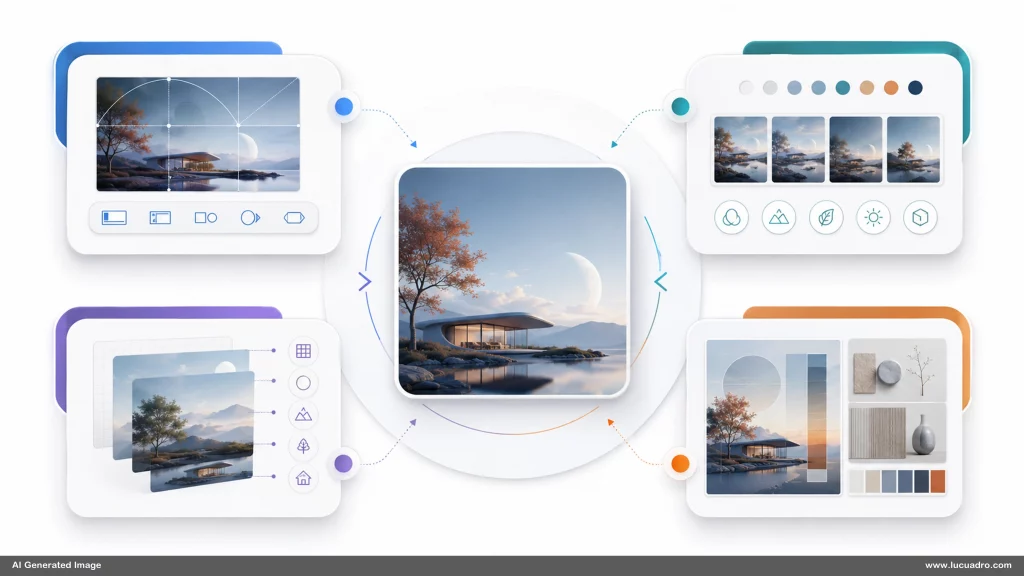
The market reaches a point where making one striking picture no longer counts as a moat. AI Visual Trends for 2027 takes shape inside that shift. Once almost anyone can generate a polished scene in seconds, the pressure moves elsewhere. You still need visuals that belong to the same campaign, fit the same brand language, and hold up across a clinic recruitment page, a training deck, a product launch slide, and a website header.
AI Visual Trends for Designers in 2027 Move Beyond Image Quality
Image quality becomes ordinary first. Resolution improves, lighting improves, anatomy improves, and the average generated image looks better than what most teams could make on their own a few years earlier. That sounds like progress, but it also removes the novelty premium. If everyone can produce a clean hero image on command, then a clean hero image stops signaling much skill. The standard rises, and the advantage moves from generation itself to the decisions wrapped around generation.
What stands out next is judgment. You notice which visuals hold a message clearly, which ones create room for copy, which ones fit the intended audience, and which ones remain useful across a whole set of materials. A bakery campaign still needs a different visual rhythm from a machine tool launch. A safety training slide still needs different framing from a founder interview thumbnail. In practice, better looking images are cheap. Better directed visual systems are not.
The change is similar to what happens when any craft tool gets easier to access. The market does not stop caring about outcomes. It starts judging the decisions that remain difficult after access broadens. In visual work, those decisions include sequencing, restraint, framing, and fit. A useful sales visual, a useful workshop slide, and a useful website hero all ask for different kinds of control. Image quality alone does not answer those needs, even when the generated surface looks impressive.
Reference Control and Visual Consistency Become More Valuable Than Prompting
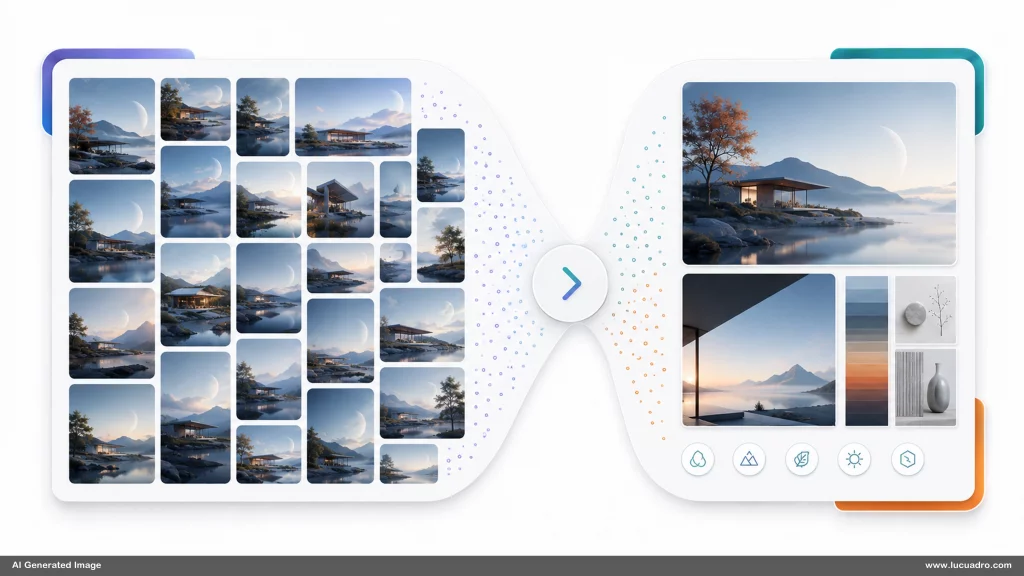
Prompting stays useful, but prompting alone does not solve continuity. The difficult part is not getting one good frame. The difficult part is getting twelve good frames that look like they belong together. You need the same person to remain recognizable, the same color logic to carry across formats, and the same composition rules to survive when the scene changes. That is why reference control rises in value. It reduces drift, narrows interpretation, and gives you a visual standard to build against.
This becomes visible as soon as one project extends beyond a single output. A clinic recruitment set may need a landing page image, a social post, and an internal presentation. A course producer may need lesson covers, diagrams, and promo assets that feel related without becoming repetitive. The teams that manage this well do not depend on luck. They build around stable references and deliberate continuity rules.
The Future of AI Image Generation Is Modular, Reusable, and Art Directed
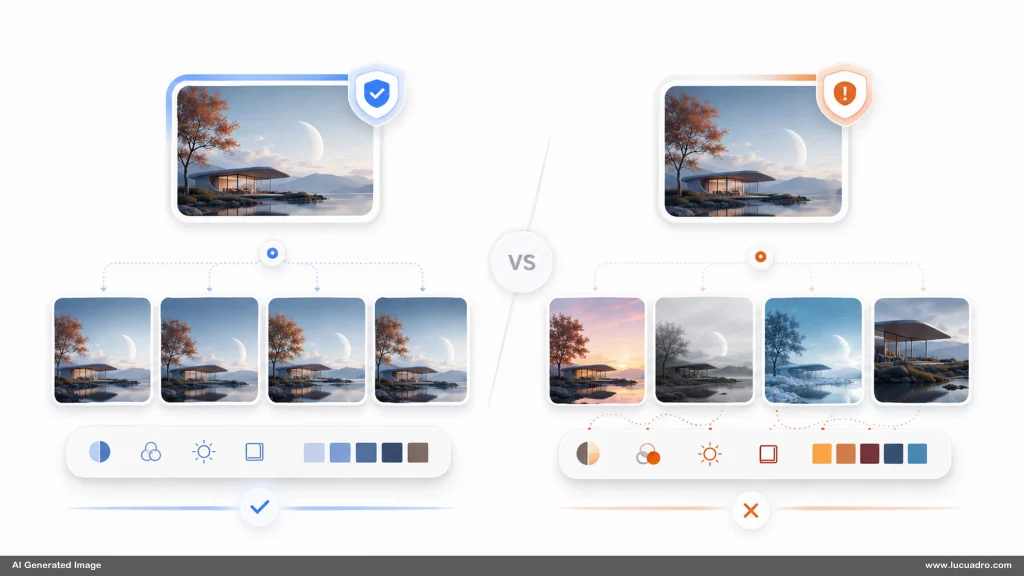
The future of AI image generation for professional design becomes more modular because finished images are often too locked to travel. A background, a character cutout, a shape treatment, and an effects layer can move into many compositions. One flattened image cannot. As more teams care about speed and consistency at the same time, reusable parts become more valuable than isolated results. They let you preserve quality while still changing hierarchy, format, and purpose from one deliverable to the next.
That shift also increases the value of art direction. You are no longer judging an output only by whether it looks polished. You are judging whether it supports the communication task. In a machine tool launch, the product angle, negative space, and industrial mood matter. In a training sequence, clarity and continuity matter more than visual spectacle. The winning workflow combines modular assets with directed composition.
Professional AI Visual Workflows Will Be Judged by Systems, Not Single Outputs
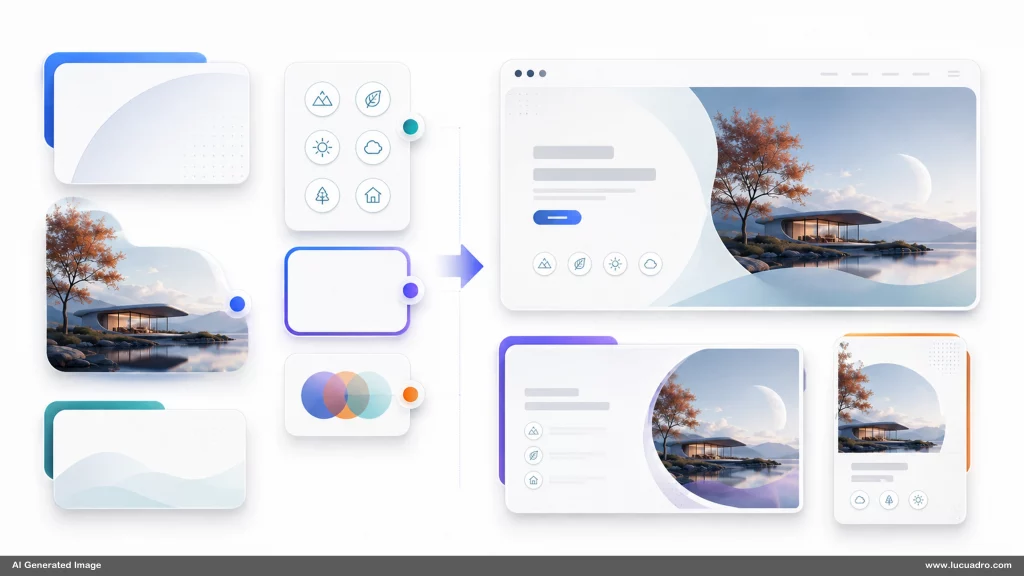
By 2027, strong teams are judged less by the occasional impressive image and more by what happens after the first output. Can they produce a coherent set quickly. Can they adapt the same visual language from website to presentation to social. Can they review a result against clear standards instead of chasing another random variation. Those are system questions, and system questions matter once generation itself becomes easy.
You can already see the outline of that future in day to day production. The expensive part is often not rendering. It is selecting references, preserving consistency, organizing usable components, and making sure the tenth asset still feels connected to the first. When those pieces are weak, the team generates more and uses less. When those pieces are strong, fewer generations produce more practical value because each image has a place inside a larger structure.
This changes how you evaluate tools and workflows. A useful system helps you preserve what should stay fixed and vary what should change. It lets you keep a character stable while changing the setting. It lets you keep a background family while updating the message. It lets you repurpose a visual asset from a presentation into a landing page without losing coherence. The teams that can do that consistently are closer to a production system than to a prompt experiment.
AI Visual Trends for 2027 points toward a market where raw generation feels ordinary and control becomes scarce. The advantage shifts to consistency, reusable structure, and directed visual judgment across a whole body of work. Lucuadro premium design assets fits that future because the useful unit is not one impressive picture, but a set of visual building blocks you can direct and recombine.