
How to tell whether an AI answer comes from evidence or plausibility is one of the most useful habits in basic AI literacy. A response can be fluent, specific, and internally coherent without being grounded in a source. The key question is not whether the answer sounds convincing. It is whether you can trace the important claims back to evidence the system actually retrieved, received, calculated, or otherwise verified.
Evidence leaves a trail you can inspect
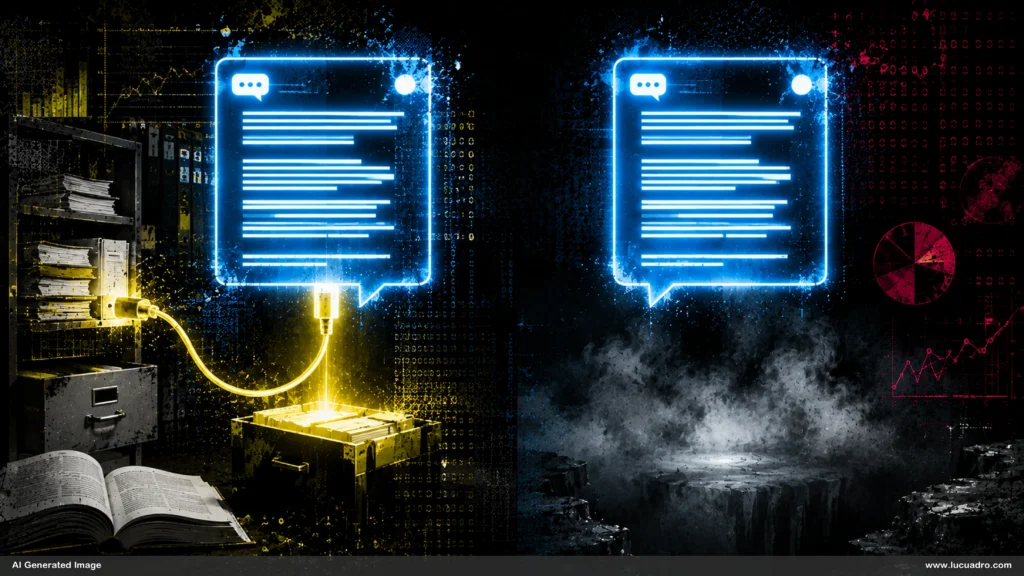
An evidence-grounded answer should have something behind it that can be checked. That might be a supplied document, a retrieved webpage, a database record, a calculator result, a file, or another explicit source available during the task.
The important feature is traceability. You should be able to move from the claim to the supporting material and inspect whether the relationship is real. Plausibility alone has no such trail. It may be based on learned patterns that sound right without exposing where the specific fact came from.
Specificity is not proof of grounding
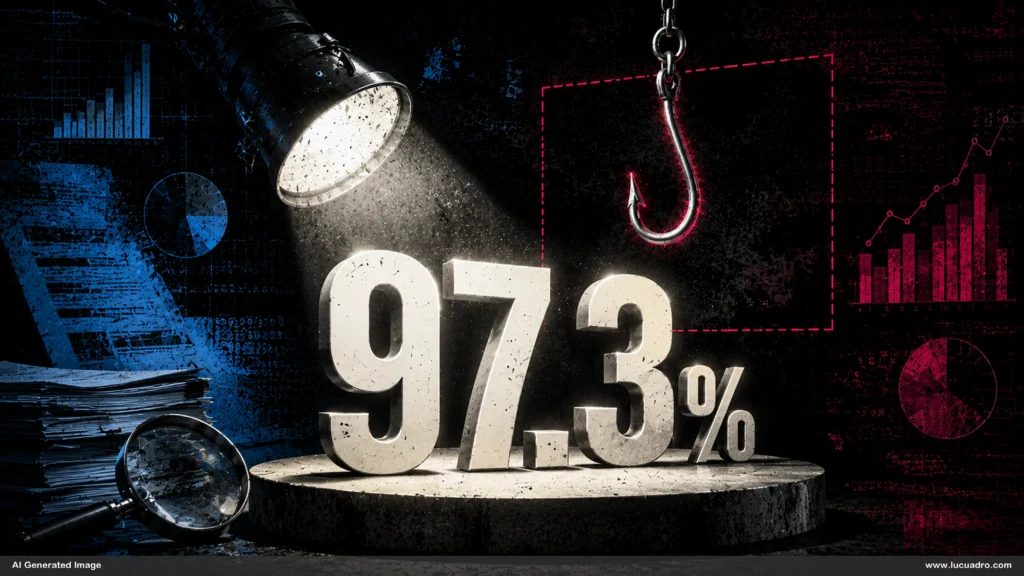
People often trust answers more when they contain exact dates, percentages, names, quotations, or technical details. Those features feel evidential because good research often contains them.
Generative AI can reproduce that surface form even when the details are reconstructed from memory or inferred from nearby patterns. A precise-looking number can still be wrong. A realistic citation can still be false. Specificity should increase your desire to verify, not decrease it.
Ask where each important claim came from
A simple test is to separate the answer into claims and ask what supports each one. Some may come directly from supplied source material. Others may be general model knowledge. Others may be interpretations, estimates, or inferences.
That distinction matters because different claim types deserve different levels of trust. If the model cannot identify a source for a highly specific factual statement, treat the statement as unverified until you confirm it independently.
Grounded answers should survive source inspection
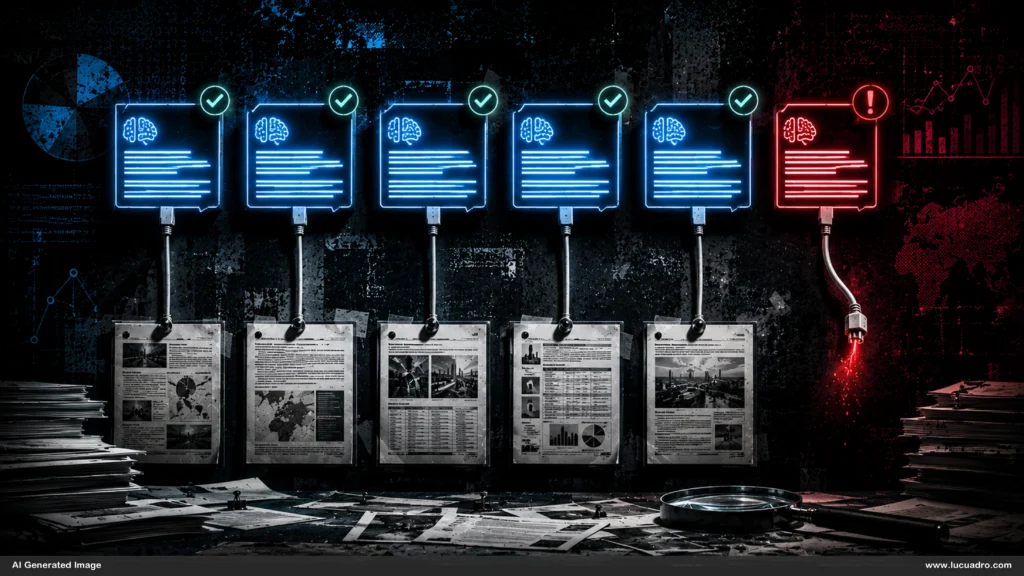
Even when the model cites a source, open it. Check whether the source actually says what the answer claims. A real document can still be misread, overgeneralized, or used outside its intended context.
This is why AI-generated citations need to be checked. The presence of a citation is only the beginning of verification. The source must exist, the metadata must be correct, and the evidence must support the claim.
Evidence can be direct or derived
Not every grounded answer needs a quotation from a source. Sometimes the evidence is the result of a reliable operation performed on known inputs. A calculator total, spreadsheet formula, database query, or code result can support a claim even though no article or document is cited.
The principle is the same: the claim comes from an inspectable process rather than an unconstrained guess. You can identify the input, operation, and output. That makes the reasoning easier to audit.
Plausibility becomes more dangerous when the topic is obscure
On familiar subjects, learned patterns may be strong enough to produce a correct answer frequently. On rare topics, the same process becomes less dependable because the model has fewer examples to rely on.
This connects to why rare questions are harder for AI than common ones. A smooth answer about an obscure subject deserves more skepticism because plausible reconstruction can fill gaps that would be obvious if the original sources were visible.
Freshness is another form of evidence
A fact can be well supported historically and still be wrong today. If the answer concerns current leadership, prices, rules, schedules, product availability, or recent events, evidence should also be recent enough for the question.
A source from two years ago may be authoritative but stale. Evidence quality therefore includes both credibility and timing. The right source must support the right claim for the right period.
Good prompts can force the distinction into the open
You can ask the model to label statements as source-backed, inferred, or uncertain. You can require links or citations for claims that depend on current information. You can ask it to say when no supporting source is available.
These instructions do not guarantee correctness, but they make the answer easier to audit. The goal is to expose the evidence boundary instead of letting grounded facts and plausible guesses blend together in one polished paragraph.
Tool use makes evidence easier to distinguish
When AI can search, open files, query databases, run calculations, or execute code, you can often tell which parts of the answer came from an external operation. That creates a stronger separation between retrieval and generation.
The model still has to interpret the retrieved material correctly, but the source of the information becomes more visible. That is much safer than assuming that every detailed sentence came from a verified fact.
The strongest signal is inspectability
Understanding how to tell whether an AI answer comes from evidence or plausibility gives you a practical filter: ask whether the important claims can be traced, opened, checked, or reproduced. If they can, you have something stronger than surface confidence. If they cannot, treat the answer as a useful hypothesis rather than established fact.