
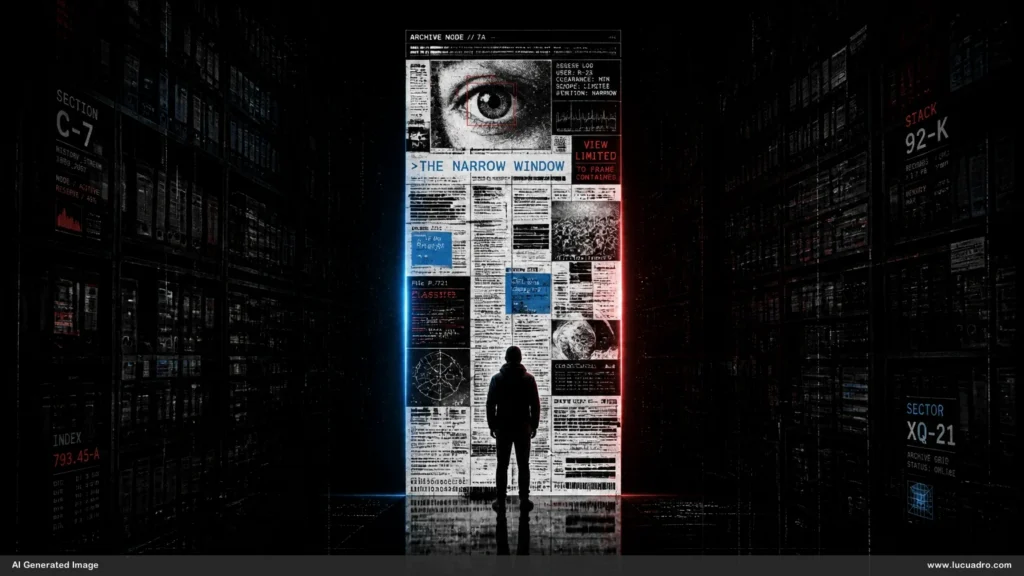
The context window: what AI can see right now is the information available to the model during the current interaction. That can include your latest prompt, earlier messages, uploaded material, retrieved sources, and tool results that have been placed into the working context. The model does not automatically inspect everything that exists around your project. It reasons from the material currently visible to it, which makes the context window one of the most important practical limits in everyday AI use.
The context window is the model’s working field
A useful way to think about context is as the model’s active workspace. Information inside that workspace can influence the next response. Information outside it cannot directly shape the answer unless it is retrieved, reintroduced, or otherwise made available.
This is different from training. Training gives the model broad learned capabilities and associations. The context window provides the immediate material for the current task. A model may know general facts about presentations, for example, while the exact presentation you want reviewed must still be placed in the working context.
Recent conversation can become part of the context
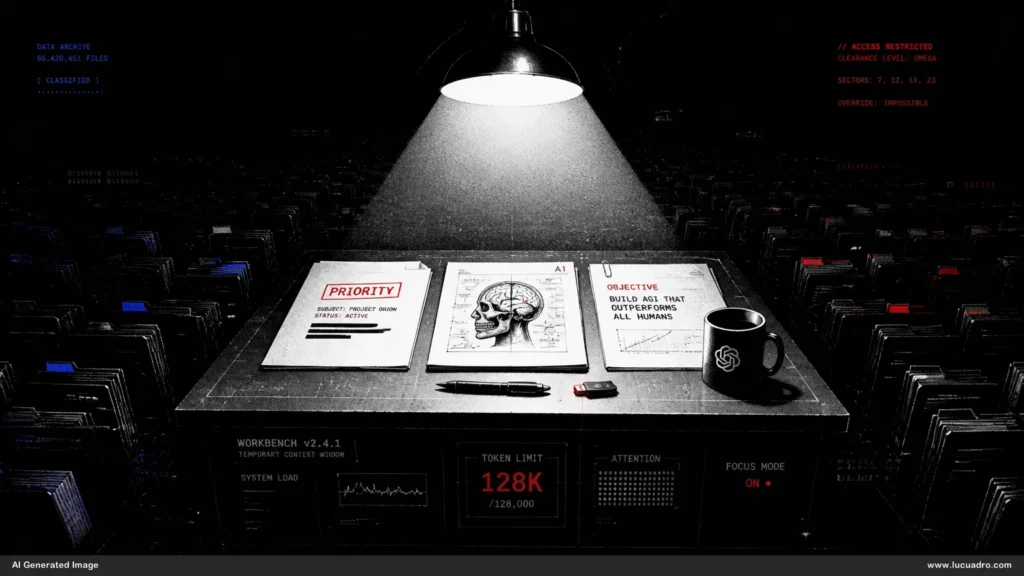
In a conversation, earlier messages may remain available so the model can interpret short follow-ups such as “make it shorter” or “use the second option.” That continuity is possible because relevant parts of the conversation are still present in the model’s current working input.
The practical effect is that you do not always need to restate every instruction. But continuity is not unlimited. Very long conversations can require older material to be compressed, omitted, or otherwise handled differently by the system. Important project constraints are safer when they are expressed clearly and kept easy to recover.
Uploaded and retrieved sources can enter the context too
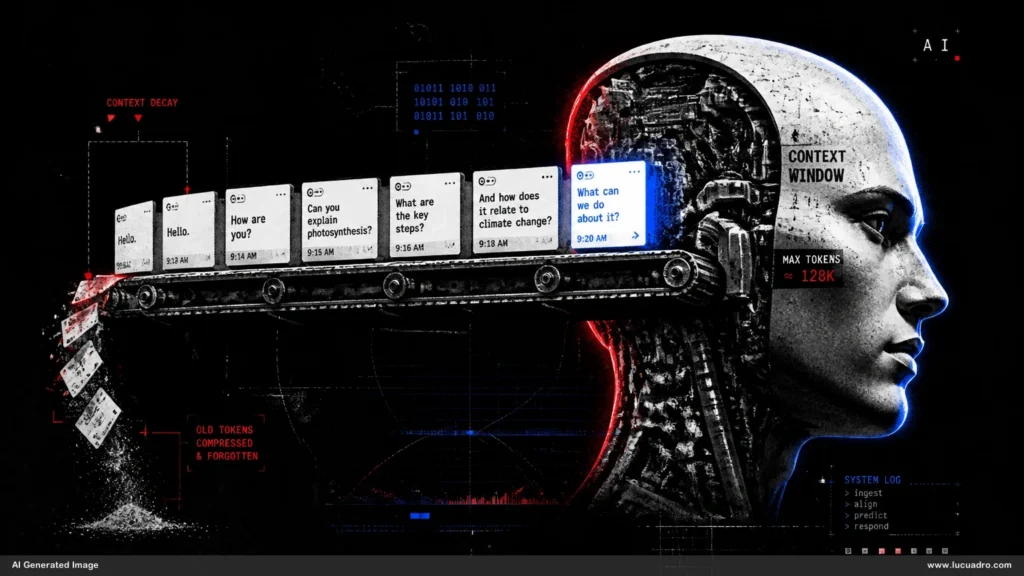
The context window can contain more than chat messages. A document you upload, a page retrieved through search, a table returned by a tool, or a relevant excerpt from a larger file can all become part of the information the model can work with.
This is why giving AI source material can improve results so much. The model can respond to the actual material rather than depending on general learned associations. The source becomes part of what it can see right now.

A larger context window does not mean perfect attention
It is tempting to assume that if information fits inside the context, the model will use every part equally well. In practice, attention is selective. Important details can be overlooked, conflicting instructions can compete, and a large amount of irrelevant material can make the task harder to interpret.
That means the goal is not simply to maximize volume. Useful context should make the task easier to understand. A concise brief plus the right source material may outperform a huge dump of loosely related files because the important signal is easier to identify.
Context is temporary unless a system preserves it another way
The information available in one interaction should not be confused with permanent memory. A context window is primarily a working mechanism for the current computation. Once information is no longer present, the model cannot rely on it unless the system has a separate memory, retrieval, or storage mechanism that can bring it back.
This distinction matters in long-running projects. A project brief, terminology guide, approved reference, or decision log is more reliable when it exists as a recoverable source rather than only as something mentioned many messages ago.
Context size sets a practical boundary on complex tasks
Every model has limits on how much information can be processed together. If a task involves many long documents, large codebases, lengthy transcripts, or extended conversations, not everything may fit into one working context at full detail.
Good workflows handle this by selecting relevant sections, summarizing intermediate results, retrieving only what is needed, or breaking the problem into stages. The objective is to preserve the information that affects the current decision instead of treating every available token as equally valuable.
Better organization makes the same context more useful
Two prompts can contain the same facts but produce different results because one presents them more clearly. Separating objectives, source material, fixed constraints, and output requirements helps the model distinguish their roles.
This connects to why better context makes AI dramatically more useful. The quality of context depends on structure as well as quantity. Information that is easy to locate and interpret is more useful than the same information buried inside an undifferentiated block.
The model only knows what the current task exposes
If an instruction depends on a document, previous decision, visual reference, or external fact that is not available in the current context, the model may have to infer what you mean. That is where generic answers, inconsistent terminology, and accidental drift often begin.
A strong workflow therefore treats context management as part of the task. Important sources are introduced deliberately, fixed constraints are made explicit, and irrelevant material is kept out. The goal is to make the working field contain the information that should control the answer.
Context windows explain both continuity and limitation
Understanding the context window: what AI can see right now helps explain why AI can appear to follow a complex project closely in one moment and still miss something that seems obvious to you. The model works from its active information field, not from unlimited awareness of your entire environment.