
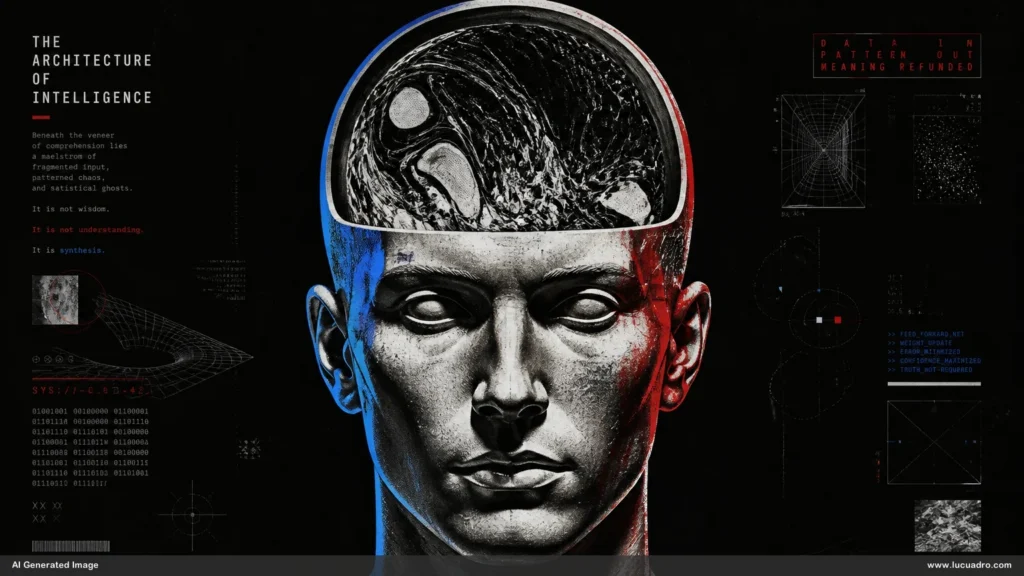
What AI actually knows and what it only appears to know is one of the most useful distinctions you can make when working with generative systems. AI can produce explanations, summaries, examples, and recommendations that feel informed because the output is fluent and structurally convincing. But fluency is not the same as grounded knowledge. To use AI well, you need to separate what comes from supplied evidence, learned patterns, retrieved information, and inference.
AI knowledge is not the same as human understanding
When a person says they know something, you usually assume some combination of memory, experience, observation, reasoning, or access to evidence. AI does not fit neatly into that model. A language model produces output by working with patterns learned from enormous amounts of data and the information available in the current interaction. It can represent relationships between concepts extremely well without possessing a human-style internal picture of the world those concepts describe.
That is why AI can explain a familiar subject in clear language while still failing on a small factual detail. The broader pattern may be strong even when the exact claim is not. It can also connect ideas in ways that are genuinely useful because it has learned how concepts tend to relate across many contexts. The practical mistake is assuming that coherent representation automatically means verified knowledge.
AI is strongest when the answer is contained in the material you provide
The reliability of an AI response changes dramatically when the task is grounded in source material. Give it a document and ask for the main argument, a table and ask for patterns, or a set of notes and ask for a clean structure, and the system has something concrete to work from. It still can make mistakes, but the task is constrained by information already present rather than requiring the model to supply unknown facts.
This is where AI often delivers unusually high value. It can compress, reorganize, compare, classify, rewrite, extract, and synthesize faster than a person could manually process the same material. In these tasks, the model is not being asked to know the external world. It is being asked to operate on a bounded information set. The closer your workflow gets to that condition, the easier it becomes to judge the output and correct errors.
Pattern knowledge can imitate factual knowledge extremely well
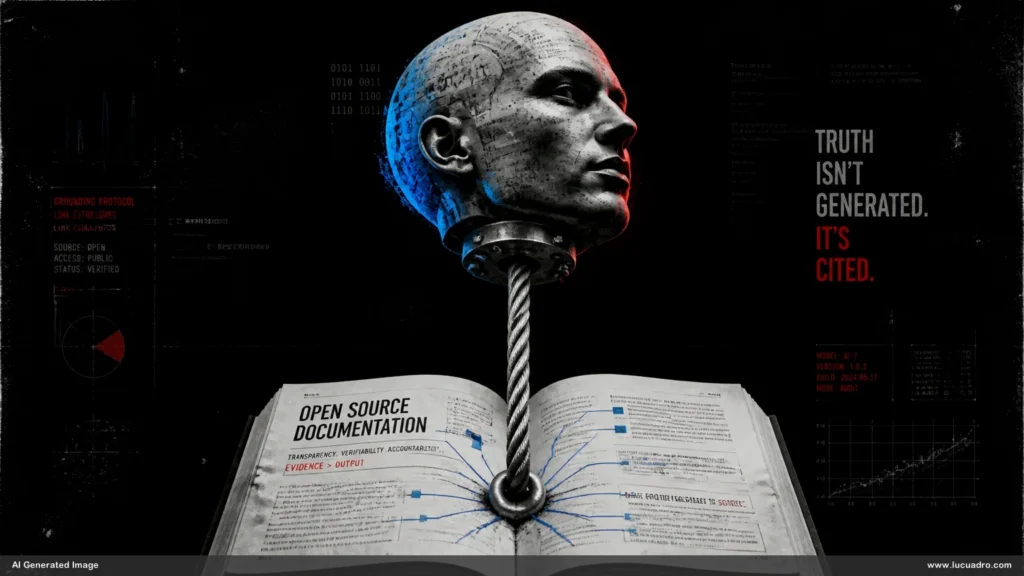
The confusing part is that pattern knowledge can look almost identical to factual knowledge on the surface. If a system has seen many examples of academic citations, legal explanations, product specifications, historical summaries, or technical documentation, it can reproduce the structure and language associated with those forms. That makes the response feel sourced even when no source has actually been consulted in the current task.
This is also why invented details can be so convincing. A fabricated book title may sound exactly like a real one. A nonexistent research paper may have a plausible author list and institutional affiliation. An incorrect technical explanation may still use the right terminology. The model can generate the shape of knowledge even when the underlying fact is missing. Recognizing that distinction is central to why AI gives confident wrong answers.
Retrieved information changes what the system can legitimately claim
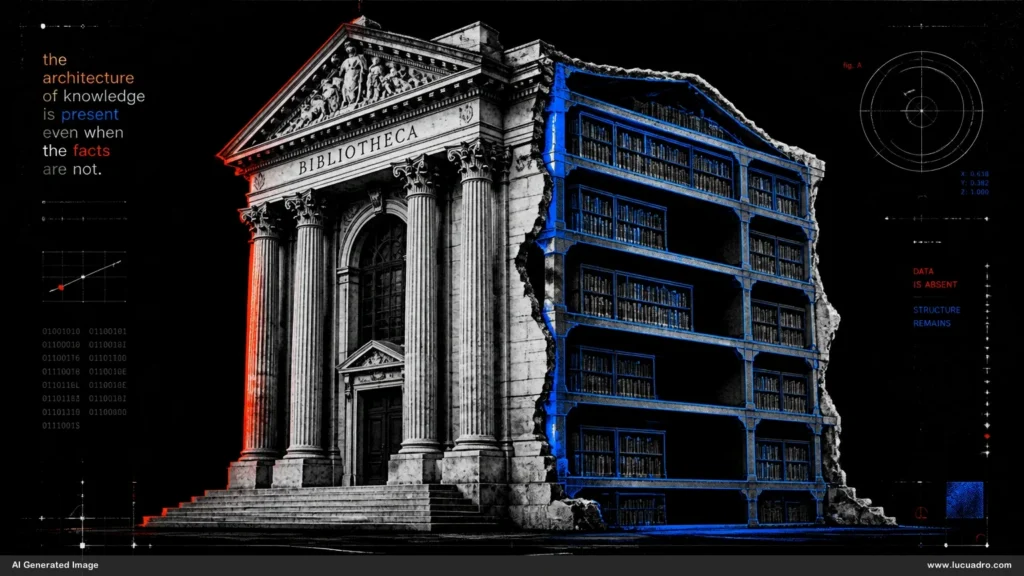
AI becomes more dependable when it can retrieve current or authoritative information and show you where the answer came from. Search, connected files, databases, and source documents create a different operating condition from pure generation. The important change is not that the model suddenly becomes incapable of error. The important change is that a claim can be traced back to evidence instead of existing only as plausible output.
This gives you a useful hierarchy. Information directly supported by a supplied or retrieved source deserves more confidence than an unsupported generated claim. A transparent inference from several verified facts deserves more confidence than a detail created with no visible basis. That hierarchy is much more practical than asking whether AI as a whole is trustworthy. Different parts of the same answer can have different levels of support.
Good AI use means separating evidence, inference, and invention
You can improve almost any AI workflow by forcing those categories apart. Ask which statements come directly from the source. Ask which are reasonable inferences. Ask which parts are suggestions, guesses, or creative additions. The exact wording matters less than the habit. Once the output is divided by evidential status, you stop treating a polished paragraph as one indivisible block of truth.
The same logic applies to visual creation. A supplied photograph, reference image, layout, or transparent asset gives the system something concrete to transform. A completely unconstrained generation forces it to invent much more of the scene. That is why reference images for AI image generation can make creative workflows more controllable. Strong inputs narrow the gap between what you intended and what the model merely inferred.
The useful question is not whether AI knows but what its answer is grounded in
Asking whether AI truly knows something can become philosophical very quickly. For practical work, a better question is simpler: what is this answer grounded in? If the answer comes from your source material, visible retrieval, or an explicit chain of supported inference, you can evaluate it. If it comes only from the model’s learned patterns, treat it as a candidate answer rather than established fact.
Understanding what AI actually knows and what it only appears to know makes the technology more useful rather than less impressive. You can rely heavily on it for transformation, synthesis, pattern recognition, ideation, and structured production while reserving verification for claims about the external world. That division is especially powerful in creative systems, where Lucuadro design resources pair strong controllable inputs with AI-assisted production instead of asking generation alone to carry the entire result.