
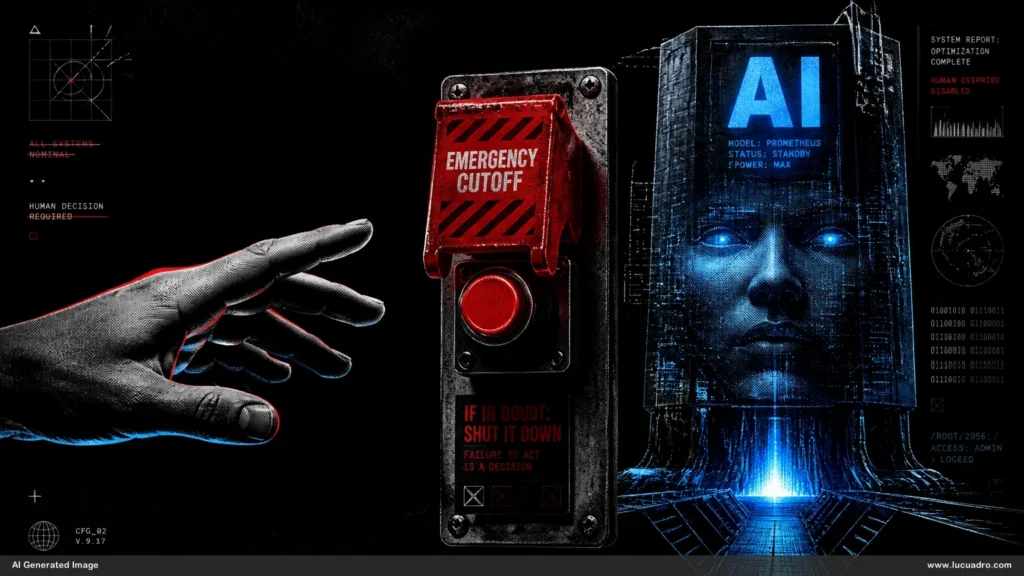
When not to use AI at all is ultimately a question about fit. AI is useful when the task benefits from speed, variation, synthesis, translation, extraction, or flexible pattern recognition. It is a poor choice when the cost of uncertainty is high, the task is already trivial to solve deterministically, the data should not enter the system, or the human work itself is the point. Knowing when to avoid AI is part of basic AI literacy.
Do not use AI when exactness matters more than flexibility
Some tasks have one correct output and already have reliable tools designed to produce it. Arithmetic, database constraints, file checksums, exact formatting rules, and many validation tasks belong in this category.
AI can assist around the edges, but a probabilistic model is often the wrong core mechanism when the requirement is strict correctness. If a calculator, parser, rule engine, or database query can solve the task directly, adding generative uncertainty may create risk without adding useful capability.

Do not use AI when the data should not leave its current boundary
A task may be technically suitable for AI but still be inappropriate because of the information involved. Highly sensitive personal data, confidential negotiations, protected records, private credentials, or restricted internal material may create unacceptable exposure depending on the product and deployment.
This connects directly to what happens to the data you put into an AI tool. If you cannot establish where the data goes, how it is retained, and who can access it, the safest decision may be not to submit it.

Do not use AI when verification costs more than doing the task yourself
AI saves time only if checking the result is cheaper than producing the result directly. For a short calculation, a simple factual lookup, or a tightly constrained edit, generating an answer and then verifying every detail can take longer than using a deterministic tool or performing the task manually.
This is an important economic test. Automation is not valuable because fewer keystrokes are involved. It is valuable when total effort falls after generation, checking, correction, and coordination are included.
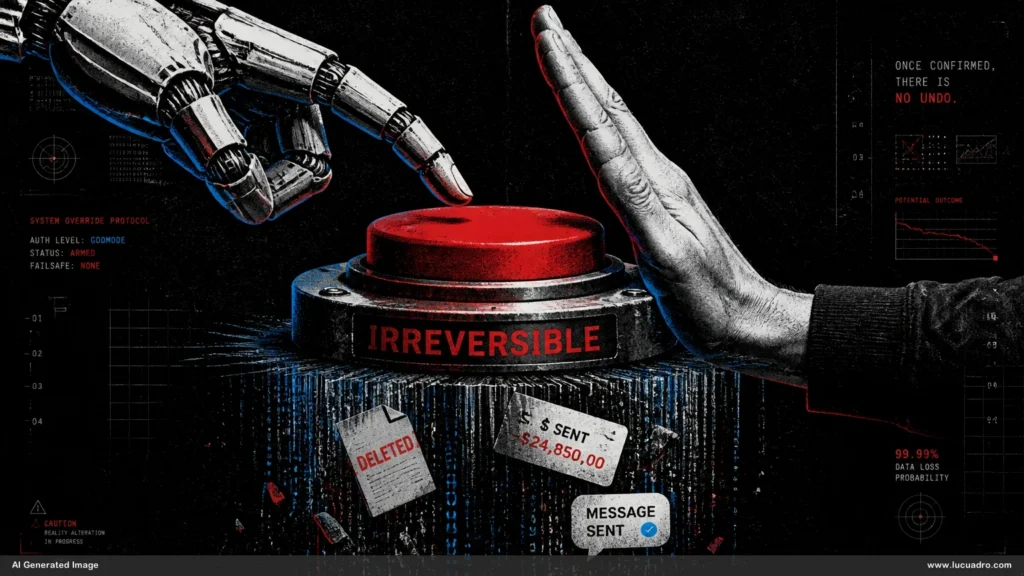
Do not use AI for irreversible actions without strong controls
Sending money, deleting records, publishing externally, canceling reservations, changing permissions, or contacting customers can create consequences that are difficult to reverse. An AI system may be capable of triggering these actions, but capability alone does not justify autonomy.
High-consequence actions should usually include confirmation, deterministic validation, permissions, limits, or human approval. This is especially important in agent workflows where one small mistake can propagate into a larger outcome.
Do not use AI when the task depends on accountable human judgment
Some decisions require more than prediction or recommendation. They require responsibility, justification, and ownership. Hiring, disciplinary decisions, safety judgments, sensitive evaluations, and other consequential choices may involve context that cannot be reduced cleanly to a model output.
AI can sometimes organize evidence or surface relevant factors, but the final judgment should remain with a person who can explain the decision and accept responsibility for it.
Do not use AI when you cannot detect a bad answer
A tool is especially dangerous when it can produce plausible output in a domain you cannot evaluate. If you have no way to recognize a fabricated citation, faulty legal interpretation, incorrect calculation, or technical error, fluent output can create false confidence.
The problem is not merely that AI can be wrong. It is that you may lack the competence or evidence needed to know when it is wrong. In those cases, expert review or a more constrained tool is a better choice.
Do not use AI when originality requires direct human authorship
Sometimes the value of the work comes from the fact that a particular person created it. A personal letter, reflective essay, artistic statement, testimonial, or sensitive communication may lose meaning if the core thought is outsourced.
AI can help edit, organize, or challenge the work, but there are situations where producing the first-order expression yourself is part of the purpose. Efficiency is not always the relevant objective.
Do not use AI when the workflow is already simpler without it
AI can become an unnecessary layer. If a two-step process becomes a six-step process involving prompting, reviewing, regenerating, copying, checking, and repairing, the tool has not improved the workflow.
This is easy to miss because AI can make individual moments feel fast. The better measure is end-to-end friction. A boring, deterministic process that works every time can be more valuable than a clever AI workflow that constantly needs supervision.
Do not use AI when you need guaranteed provenance
Some work depends on a clear chain from source to conclusion. Audits, regulated documentation, evidence review, scientific reporting, and other provenance-sensitive tasks require you to know exactly where each claim came from.
AI can assist when grounded in inspectable sources, but unsupported generation is the wrong mode. This is why distinguishing evidence from plausibility matters. If provenance cannot be reconstructed, the output may be unusable regardless of how convincing it sounds.
The best AI decision is sometimes no AI
Knowing when not to use AI at all is not anti-technology. It is good tool selection. Use AI where probabilistic intelligence creates leverage. Use deterministic software where exactness matters. Use human judgment where responsibility and meaning matter. Keep sensitive data inside appropriate boundaries. The goal is not maximum AI usage. It is maximum task quality with the least unnecessary risk.
Lucuadro design resources follow the same principle of fit. Generative methods are powerful where exploration and variation matter, while controlled assets are stronger where precision, reuse, and consistency matter. Good systems choose the right production method for each part of the work instead of forcing one tool into every job.