
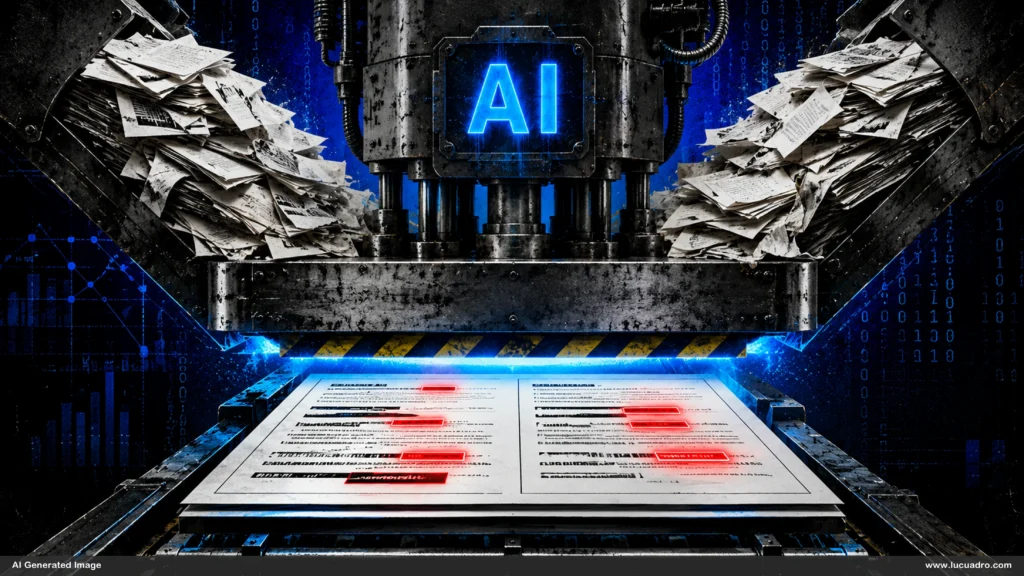
How AI can help you compare documents side by side is mostly about creating a consistent frame. Two documents may cover the same subject while differing in structure, terminology, emphasis, or level of detail. Reading them separately makes those differences harder to track. AI can inspect both sources against the same criteria, align corresponding sections, surface agreements and contradictions, and point you toward the places where manual review matters most.
Comparison becomes easier when both documents are forced into the same structure
Two documents rarely organize information in exactly the same way. One may lead with conclusions while another starts with background. One may separate risks from recommendations while another mixes them together. Even when both contain similar information, the mismatch in structure creates extra work for the reader.
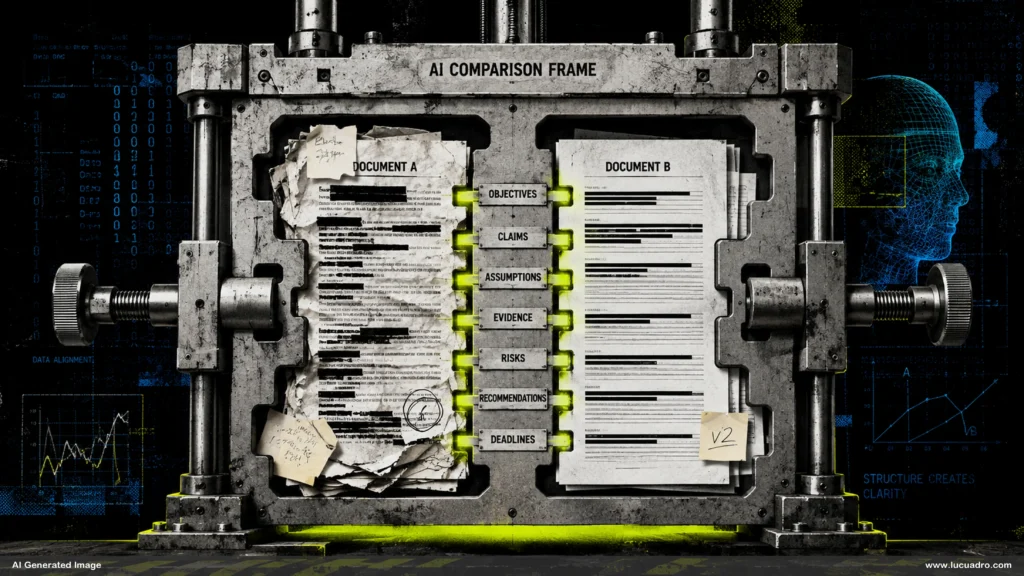
AI can reduce that friction by extracting the same categories from each source. Ask for objectives, claims, assumptions, evidence, risks, recommendations, deadlines, or any other fields that matter to your task. Once both documents are represented through the same structure, differences become easier to inspect.
AI can surface agreements and contradictions quickly
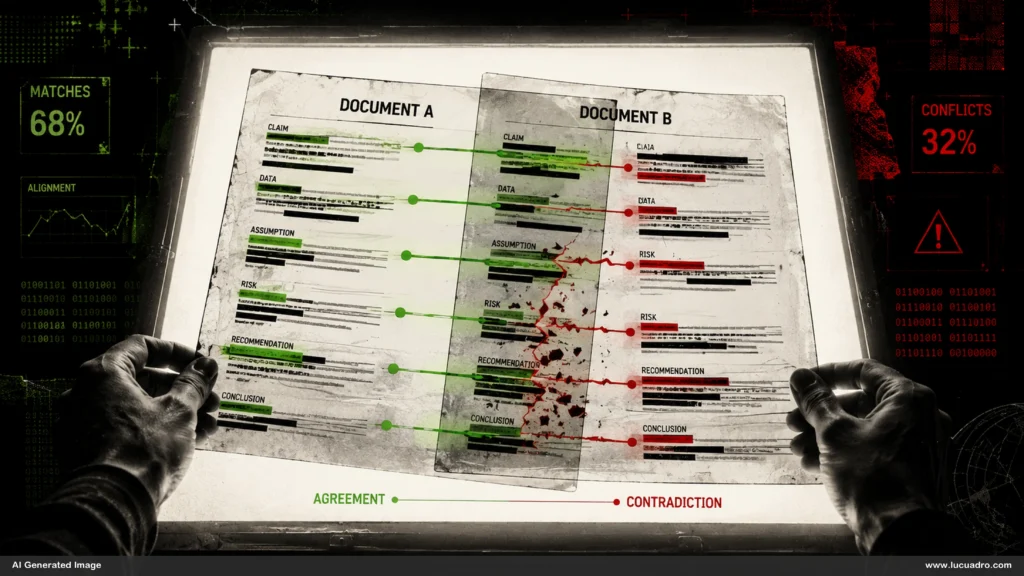
Some differences are obvious, but others are buried in wording. Two reports may appear to agree while using slightly different assumptions. Two proposals may recommend similar actions but disagree on timing, cost, or priority. AI can compare the statements directly and identify where the documents reinforce each other and where they diverge.
The important part is to ask for the contrast explicitly. A useful comparison might separate full agreement, partial agreement, contradiction, and information that appears in only one source. This is more precise than asking for a generic comparison because it gives the model categories for judging the relationship between the documents.
Side-by-side comparison helps you notice what is missing
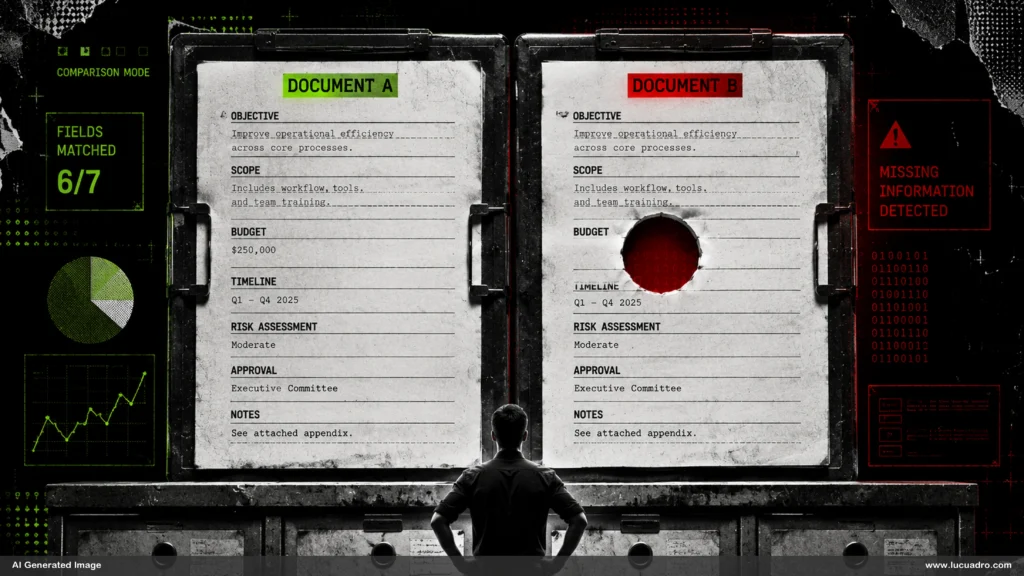
A document can differ because it says something different, but it can also differ because it says nothing at all. Missing information is often important. One proposal may include implementation detail that another omits. One research summary may discuss limitations while another ignores them. One policy may define exceptions that another never mentions.
AI can help detect those asymmetries when both sources are examined against a common checklist. This connects directly to extracting specific information from text. Once the same fields are pulled from both documents, empty fields become meaningful rather than invisible.
AI can compare meaning even when the wording is different
Traditional text comparison is good at showing which words changed. That is useful for version control, but it does not always tell you whether the underlying meaning changed. Two sentences can use different words and still make the same claim. They can also use similar words while changing an important condition.
AI can compare at the semantic level. You can ask whether two passages express the same requirement, whether one is broader than the other, or whether a qualification has been added or removed. That makes the comparison more useful for reports, policies, proposals, research notes, and other documents where meaning matters more than literal wording.
Long documents benefit from comparison in layers
Trying to compare two long sources all at once can produce an overview that is too compressed to trust. A better method is layered comparison. Start with the main structure, then compare the corresponding sections, then inspect individual claims where the documents differ.
This connects to using AI to compare large amounts of information. Compression helps you find the important regions first, but the final judgment should return to the source passages where the difference actually occurs.
Comparison is stronger when the criteria come from your decision
A generic comparison often produces generic differences. The better question is what decision the comparison is supposed to support. If you are choosing between proposals, cost, scope, risk, timing, and exclusions may matter. If you are comparing research, methodology, evidence, findings, and limitations may matter instead.
AI becomes more useful when you define those criteria before the comparison begins. The model can then ignore irrelevant differences and focus attention on the dimensions that affect your choice. This turns side-by-side comparison from document summarization into decision support.
It can also help to run the comparison twice with different levels of strictness. A first pass can identify broad differences in themes and recommendations. A second pass can focus only on exact claims, numbers, exclusions, or conditions. Separating those passes reduces the chance that a meaningful small change gets buried inside a high-level summary.
Source references make the output easier to verify
Document comparison can create a false sense of confidence if the model presents conclusions without showing where they came from. A clean table or polished summary may hide a misread sentence, merged claim, or omitted qualification.
For important work, ask for supporting passages, section names, page references, or short quotations where possible. The purpose is not to make the output longer. It is to make each important difference traceable back to the source. AI should reduce the amount of manual reading required, not make the source impossible to audit.
The strongest use is to narrow the review surface
Understanding how AI can help you compare documents side by side gives you a practical way to review more material without treating every sentence as equally important. Create one comparison frame, surface agreements, contradictions, missing fields, and meaning changes, then manually inspect the differences that matter most.
Visual comparison works the same way. Differences become easier to evaluate when two options share the same frame, scale, and hierarchy.