
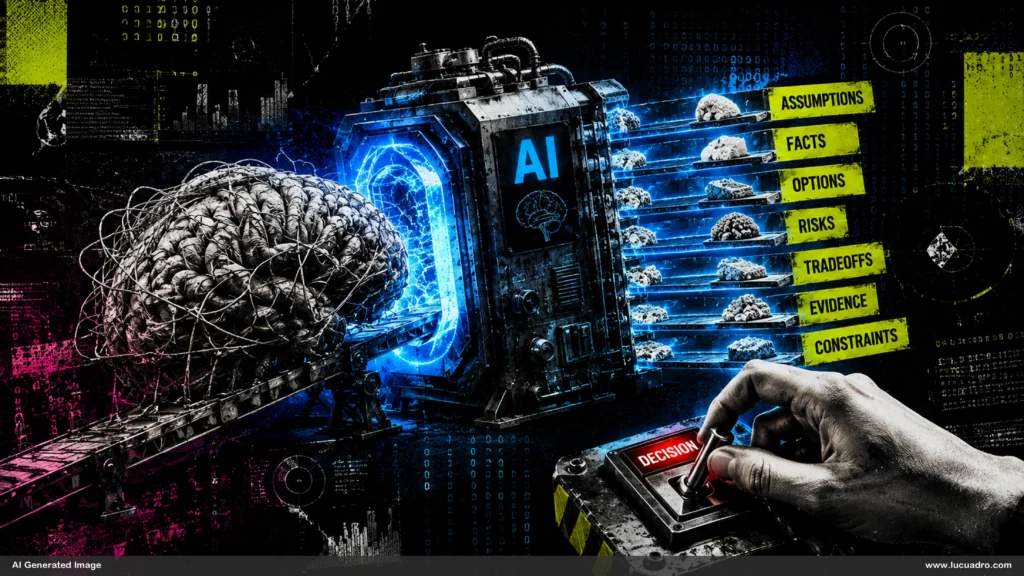
How AI can help you think through a problem more clearly has less to do with outsourcing the answer and more to do with improving the shape of your thinking. Many difficult problems feel difficult because the variables are mixed together, assumptions stay implicit, and possible paths are not separated cleanly. AI can help externalize that mental clutter. It can restate the problem, surface hidden assumptions, generate alternatives, compare tradeoffs, and turn a vague concern into something you can actually inspect.
AI is useful when the problem is still badly formed
People often try to solve a problem before they have defined it properly. You may know that a project is underperforming, a presentation feels weak, or a decision feels risky, but the actual source of the difficulty is still unclear. In that state, the problem exists as a bundle of impressions rather than a precise question.
AI can help by forcing the problem into language. Ask it to separate symptoms from causes, list what is known versus assumed, identify missing information, or rewrite the issue as several concrete questions. That process does not guarantee a solution, but it improves the starting point. A better problem statement reduces the chance that you spend time solving the wrong thing.
Externalizing assumptions makes reasoning easier to inspect
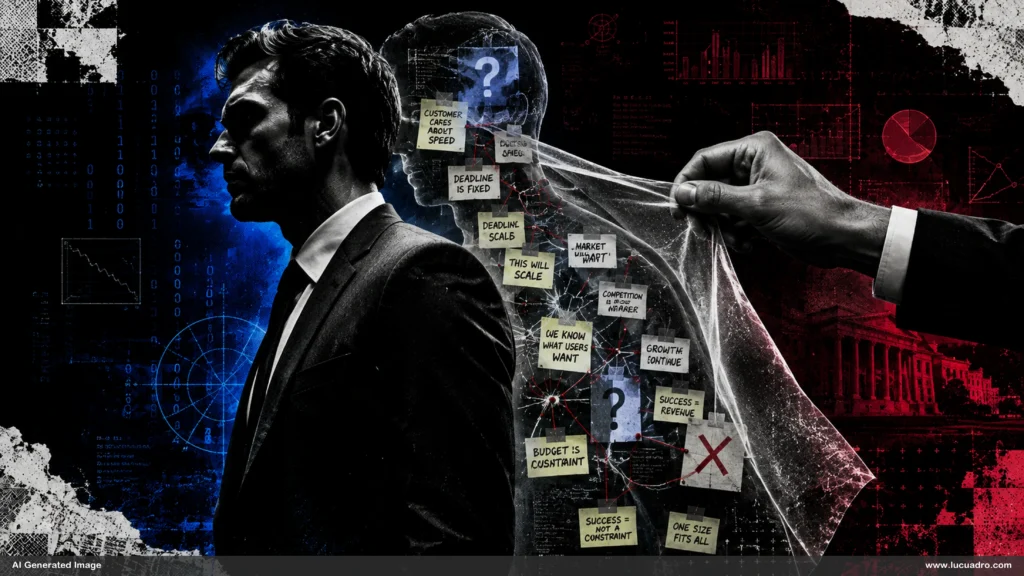
Some of the most important parts of a decision never get written down. You assume a customer cares about speed. You assume a deadline is fixed. You assume one option is more expensive. You assume a certain design direction is more professional. Those assumptions shape the decision even when nobody has tested them.
AI is useful because you can ask it to identify the assumptions embedded in your own description. Once those assumptions are visible, you can classify them as known facts, reasonable inferences, uncertain beliefs, or things that need verification. This changes the problem from a vague internal feeling into a set of claims you can inspect. The system is not replacing judgment. It is making the ingredients of judgment more visible.
AI can widen the option set before you commit
Another reason problems feel difficult is that people often compare too few alternatives. The first plausible answer becomes the default, and everything else is judged against it. AI lowers the cost of exploring other possibilities. You can ask for several structurally different approaches, alternative explanations, opposite assumptions, or ways the problem could be reframed.
This connects directly to using AI to generate multiple ideas. The goal is not to accept whatever the model proposes. The goal is to avoid premature convergence. A wider option set gives you more material for comparison and makes hidden tradeoffs easier to see.

Structured comparison helps separate tradeoffs from preferences
Once several options exist, AI can help compare them under a consistent frame. You might evaluate each one by cost, speed, reversibility, risk, expected upside, evidence required, or fit with the original goal. This prevents the comparison from drifting toward whichever option sounds most persuasive in prose.
The key is to define the criteria before asking for a recommendation. If the model chooses the criteria itself, it may optimize for dimensions you do not care about. If you provide them, the analysis becomes easier to audit. This is one reason using AI to compare large amounts of information works so well when the comparison dimensions are explicit.
AI is especially useful for finding missing questions
A good problem-solving partner does not only answer questions. It notices which questions have not been asked yet. AI can help identify missing stakeholders, overlooked constraints, second-order effects, dependencies, edge cases, or evidence gaps. This is valuable because many bad decisions come from incomplete framing rather than poor reasoning inside the frame.
You can use the system to stress-test a plan by asking what would have to be true for it to work, what could invalidate the conclusion, what information would most change the decision, or what an informed skeptic would challenge first. These prompts turn AI into a structured source of friction rather than a machine that simply agrees with the current direction.
The clearest workflow separates thinking from deciding
AI can improve the reasoning process without becoming the decision-maker. Let it help define the problem, expose assumptions, generate options, organize evidence, and compare tradeoffs. Then make the final judgment yourself, especially when values, priorities, risk tolerance, or consequences matter. Those are not merely pattern-matching problems.
This separation is important because good reasoning is not the same as automatic delegation. The system can make a problem easier to see, but it does not inherit your goals or responsibilities. The strongest use is often to make the decision surface clearer so that your own judgment has better material to work with.
Better thinking often starts with better structure
Understanding how AI can help you think through a problem more clearly changes the role you give it. Instead of asking for one answer immediately, you can use it to define the issue, reveal assumptions, widen the option set, identify missing questions, and organize tradeoffs. That makes the process more deliberate without making it slower.
The same principle applies in creative work. A vague request produces vague exploration, while strong references and well-defined components make decisions easier to compare. Lucuadro design resources support that kind of structured creative thinking by giving you controllable visual ingredients that can be arranged, tested, and refined with AI instead of relying on one unconstrained generation to solve everything at once.