
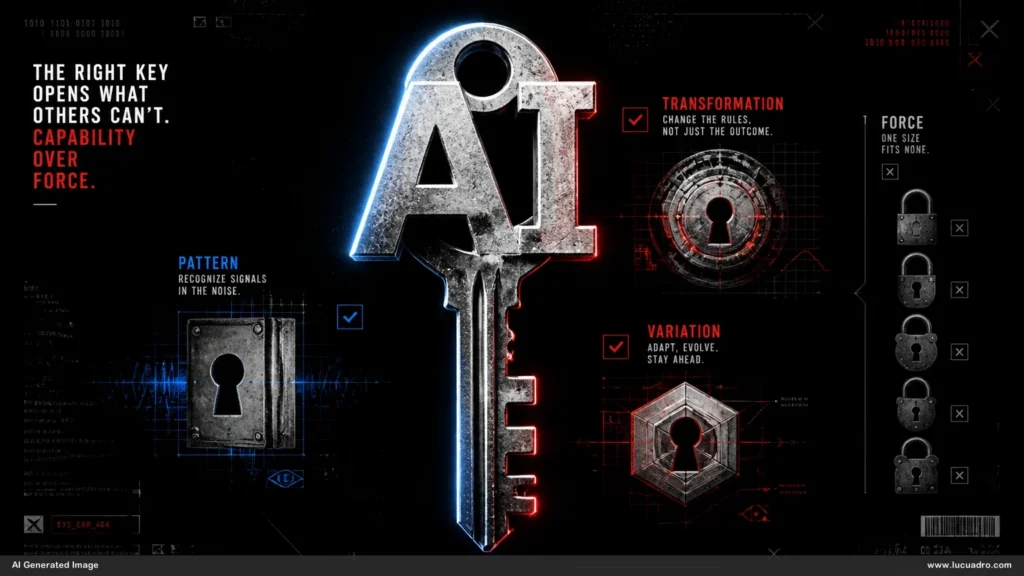
Why AI becomes more useful the better you understand its strengths is simple: performance improves when the task matches what the system is actually good at. AI is not equally capable at every kind of work. It is unusually strong at pattern recognition, transformation, synthesis, restructuring, comparison, and rapid variation. It is weaker when a task depends on verified external reality, exact judgment, or constraints the model cannot see. Better results come from assigning work with those differences in mind.
AI works best when you stop treating every task as the same kind of problem
Many disappointing AI workflows begin with one assumption: if the model is intelligent, it should be able to handle any task in roughly the same way. That is not how the technology behaves. Rewriting supplied material is different from discovering an unknown fact. Generating ten visual variations is different from reproducing an exact product. Summarizing a transcript is different from deciding whether the transcript itself is accurate.
The more clearly you classify the task, the easier it becomes to predict where AI will help. Pattern-heavy tasks usually benefit quickly. Reality-heavy tasks need stronger grounding. High-precision tasks need tighter constraints and verification. Open-ended creative tasks benefit from references and iteration. Once those categories become familiar, you spend less time fighting the system and more time using it where its capabilities create an actual advantage.
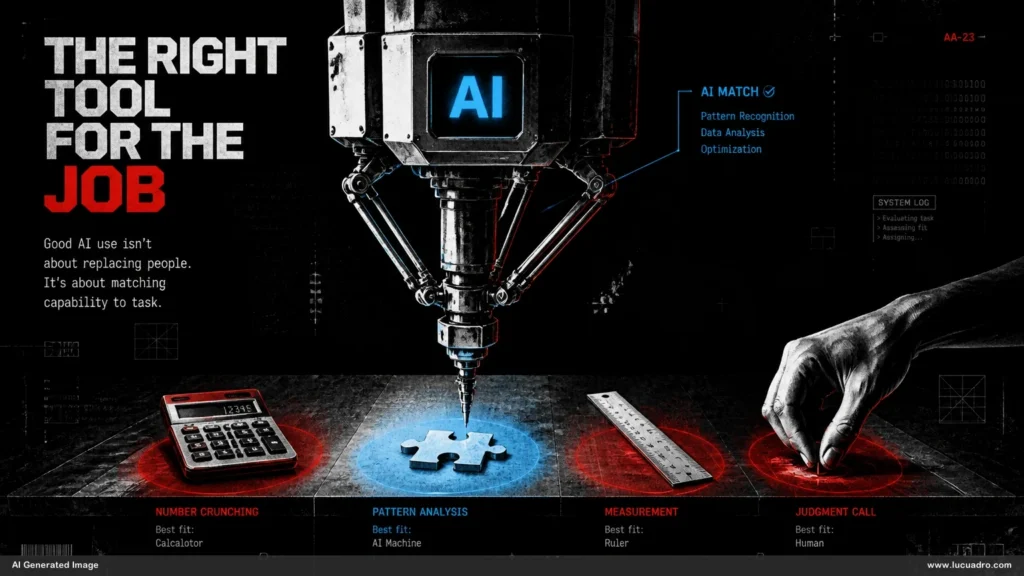
Pattern recognition is one of the most transferable AI strengths
AI can detect recurring structure across text, images, examples, and mixed information. This makes it useful for grouping feedback, comparing references, extracting themes, identifying similarities, cleaning up rough inputs, and spotting patterns across more material than you would comfortably inspect manually. In these situations, the system is operating close to its core strength rather than being asked to invent unsupported facts.
This is why why AI is good at pattern recognition matters far beyond technical curiosity. It tells you what kinds of work are naturally compatible with the model. If the value of the task comes from detecting relationships inside the material, AI is often an excellent first pass. If success depends on correspondence with external reality, the workflow needs an additional source of truth.
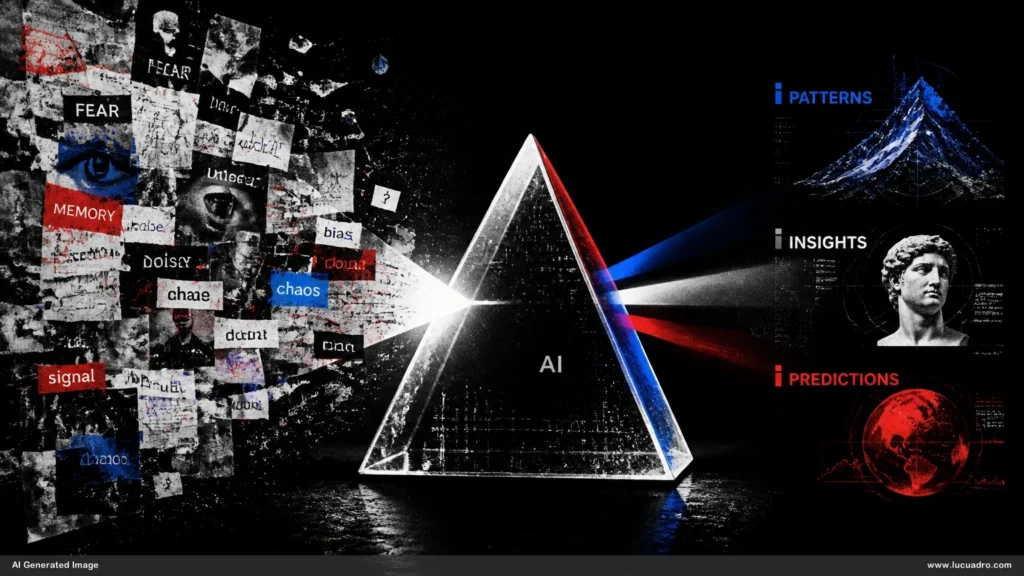
Transformation is often more reliable than invention
One of the most practical AI skills is turning one form of material into another. Notes become an outline. A long document becomes a concise summary. A collection of examples becomes a style description. A rough draft becomes cleaner prose. A set of visual references becomes an art direction. The system is not starting from an empty space. It is working on information you can inspect and compare against the result.
That makes transformation easier to evaluate than pure invention. You can see whether important details were preserved, whether the structure improved, and whether the output still reflects the source. This is why using AI to summarize and structure information is such a strong application. The source material limits the search space and gives the model something concrete to transform.
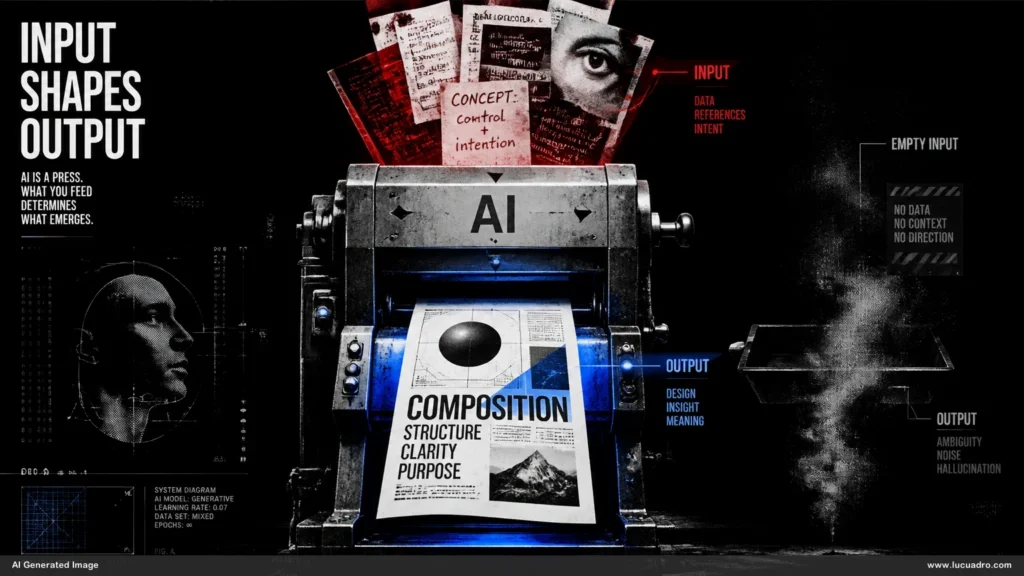
AI becomes more controllable when you supply strong inputs
The quality of the output depends heavily on how much useful structure enters the task. Strong references, examples, source documents, approved claims, brand assets, screenshots, layouts, and visual components all reduce the amount the model has to infer. This does not eliminate error, but it moves the workflow away from unconstrained generation and toward controlled transformation.
Visual production makes this easy to see. Asking for a complete image from a short description leaves composition, subject details, materials, lighting, camera position, and style open to interpretation. Supplying references or separable assets gives the model anchors. You retain more control over what matters while still using AI for recombination, adaptation, and polish. The model becomes a production layer rather than the sole source of every decision.
Understanding weaknesses lets you use strengths more aggressively
Knowing where AI fails is not mainly about caution. It is what allows you to push harder where the system is genuinely strong. If you know that a generated factual claim needs verification, you can still use AI aggressively for drafting and synthesis. If you know exact visual identity may drift, you can use references and controlled edits. If you know the system is good at variation, you can generate many options and reserve human judgment for selection.
This creates a better division of labor. AI handles volume, pattern extraction, restructuring, comparison, and iteration. You handle goals, source selection, constraints, verification, taste, and final judgment. The workflow becomes stronger because neither side is being asked to do the part it handles badly. The point is not to reduce dependence on AI. It is to place that dependence where it produces the highest return.
AI literacy is really task design literacy
Basic AI literacy is often described as understanding what models are, how they work, or why they make mistakes. Those things matter, but practical literacy shows up in the way you design tasks. You know when to provide source material. You know when to ask for alternatives instead of one final answer. You know when a claim needs checking. You know when a reference image is more valuable than another paragraph of prompting.
Why AI becomes more useful the better you understand its strengths is ultimately a workflow question. The technology delivers more value when you assign it pattern-heavy, transformation-heavy, and variation-heavy work, then support reality-sensitive tasks with strong inputs and verification. That same logic underpins Lucuadro design resources: give the creative process better components, preserve control over composition, and use AI where it accelerates the work instead of asking it to replace every part of the process.