
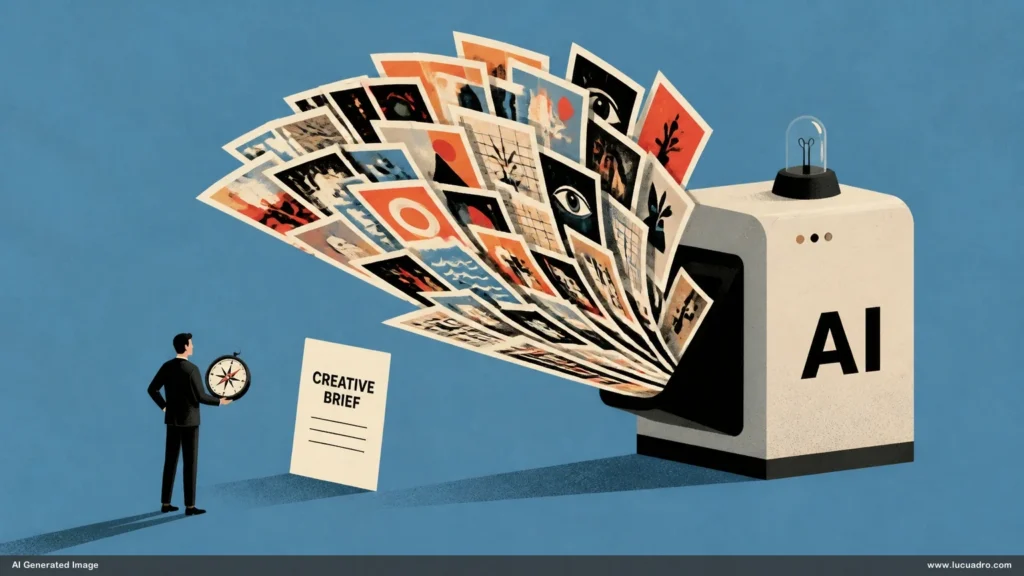
Why AI is better at creative variation than creative replacement becomes clearer once you separate making more options from deciding what deserves to exist. AI is extremely good at producing alternatives around a prompt, reference, style, structure, or concept. It is much less reliable at replacing the judgment that defines what the work should communicate, which tradeoffs matter, and which variation is actually right. Its strongest creative role is often expansion around direction, not substitution for direction.
Variation is a pattern problem, and AI is very good at patterns
Creative variation usually starts with something already present: a concept, composition, message, style, or constraint. The task is to change one or more dimensions while preserving enough of the original structure to remain recognizable. That is a pattern transformation problem.
AI handles this well because it can generate many plausible versions of a known form. A headline can become more direct, more technical, or more playful. A visual concept can be explored through different compositions, moods, settings, or focal points. The model does not need to invent the purpose from zero every time.
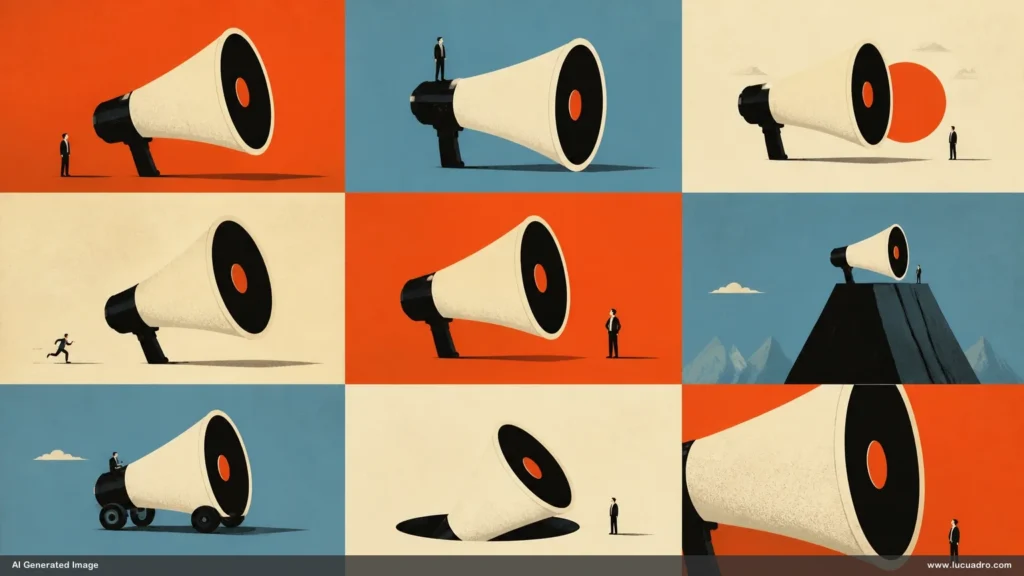
Replacement asks AI to make decisions that are not contained in the prompt
Creative replacement is harder because the task includes hidden decisions. Which audience matters most? What should the work make them notice first? Which references are relevant? What can be simplified? What should feel familiar, and what should feel new? Those decisions depend on context, taste, strategy, and consequences outside the generated output.
AI can imitate the shape of those decisions, but that is not the same as knowing which one is correct. If the brief is vague, the model often fills the gaps with high-probability choices. The result may look competent while drifting toward generic patterns because nothing in the prompt forces a sharper point of view.
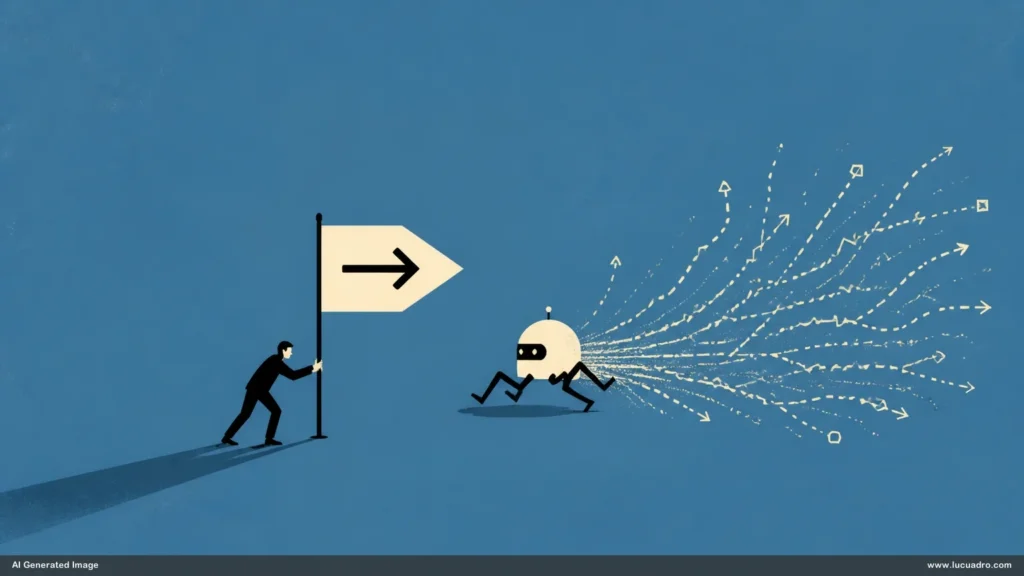
AI becomes stronger when creative constraints are already defined
Constraints give variation somewhere useful to happen. A defined palette, audience, reference image, layout system, tone, visual hierarchy, or message reduces the number of irrelevant directions the model can take. Instead of exploring the entire creative space, AI explores a narrower region that already reflects human intent.
This is closely related to why better context makes AI more useful. The more clearly the important boundaries are defined, the more likely the generated variations are to be genuinely useful rather than merely different.
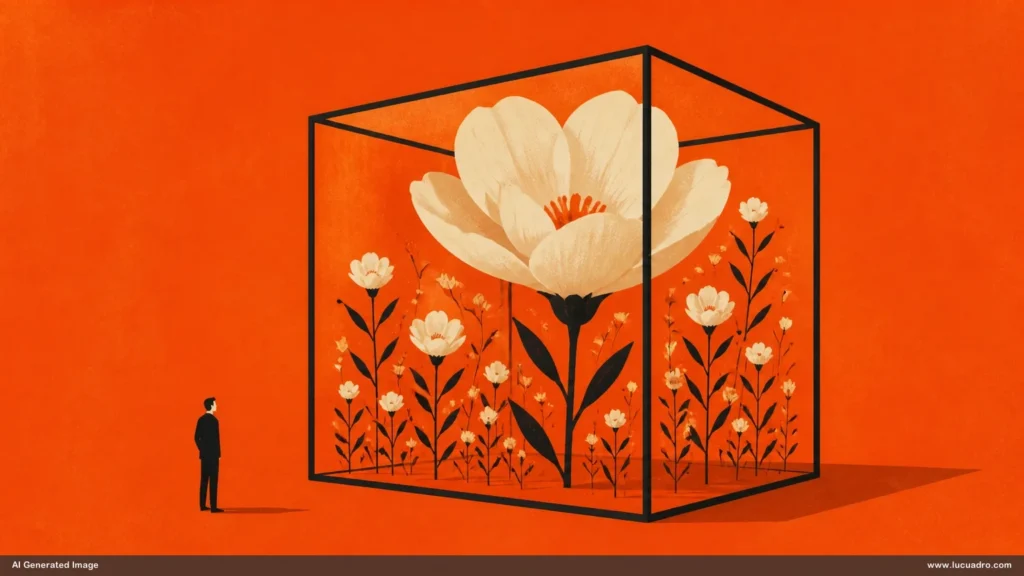
Creative judgment becomes more important when options become cheap
Before generative AI, producing ten credible alternatives might require considerable time. Now the production cost can be much lower. That changes the bottleneck. The hard part moves from generating options to evaluating them.
You still have to decide which version has the strongest hierarchy, clearest message, most useful framing, best fit for the audience, or most appropriate level of novelty. When variation becomes abundant, selection becomes more valuable. The ability to reject attractive but weak options matters as much as the ability to create more of them.
References make variation more controllable
A reference gives the model something concrete to preserve. That might be a composition, character, product, tone, color relationship, photographic treatment, or structural pattern. The model can then vary around a known target instead of guessing the target from language alone.
This is why reference-driven workflows often feel more reliable than blank-page generation. The creative space is still large, but the reference reduces uncertainty around what must remain consistent. AI can explore alternate expressions without constantly redefining the visual identity or core structure.
Variation is useful because it makes comparison possible
A single creative output is difficult to judge in isolation. You may like it simply because it is the first coherent option you have seen. Several controlled alternatives make tradeoffs visible. One version may be clearer, another more distinctive, another more suitable for a specific format.
This connects to using AI to generate multiple alternatives. The goal is not maximum quantity. It is enough structured variation to reveal which creative choices actually improve the result.
That makes iteration more strategic. Instead of asking for “another version,” you can vary one dimension at a time and inspect the effect. Change the framing while holding the message constant. Change the mood while preserving the composition. Change the composition while keeping the same reference material. Controlled variation makes cause and effect easier to see.
Replacement tends to produce sameness when direction is weak
When AI is asked to replace the entire creative process, it often falls back on patterns that are statistically common and easy to recognize. That can create technically polished outputs that feel familiar across brands, campaigns, presentations, or images. The problem is not that the model cannot produce novelty. The problem is that novelty without direction is difficult to evaluate and difficult to repeat coherently.
Human direction gives the work a reason to be different. AI then becomes useful for testing how that difference can appear across formats, contexts, and variations without rebuilding every execution manually.
The strongest creative role for AI is expansion around intent
Understanding why AI is better at creative variation than creative replacement helps define a more productive division of labor. Human judgment establishes purpose, constraints, references, and standards. AI expands the option set, explores variations, and accelerates iteration. The model does more of the searching while the human keeps responsibility for what the work is trying to achieve.