
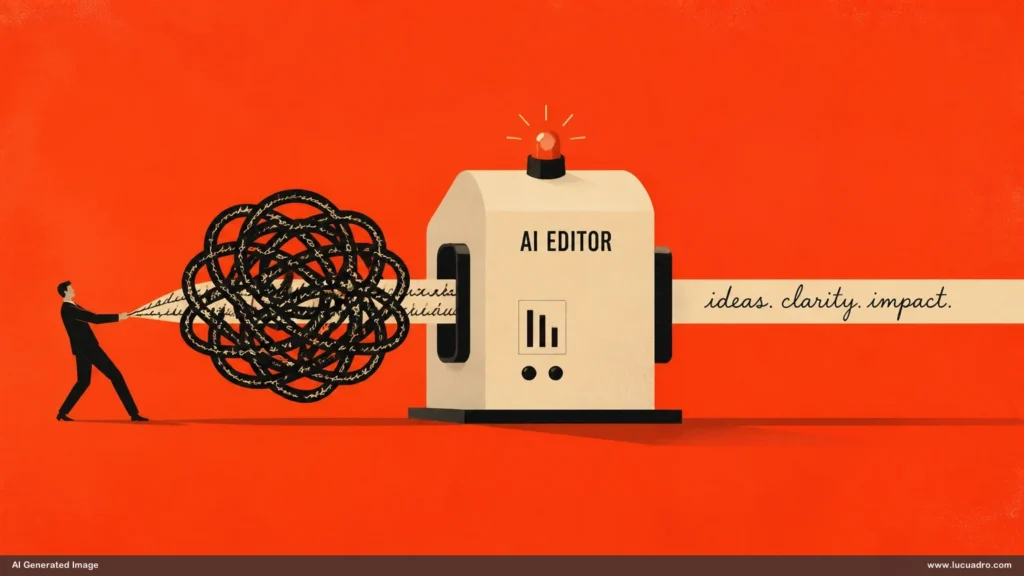
Why AI is so good at improving clarity without changing the core idea becomes easier to understand when you separate content from expression. A message can be valuable and still be hard to follow because the structure is weak, the wording is dense, or the important point is buried. AI is particularly useful at rewriting the surface while preserving the underlying meaning. That makes it effective for editing, simplifying, reorganizing, and tightening communication without forcing you to start over.
Clarity problems often come from structure rather than substance
Many weak drafts do not have a bad idea at the center. They have a presentation problem. The conclusion arrives too late, supporting points appear out of order, background information crowds the main claim, or several ideas are mixed inside one paragraph. Readers have to work harder than necessary to reconstruct what the writer meant.
AI can help by separating those layers. You can ask it to identify the core claim, supporting evidence, assumptions, examples, and secondary detail. Once the internal structure becomes visible, the same material can be reordered into a cleaner sequence without changing the actual position being expressed.
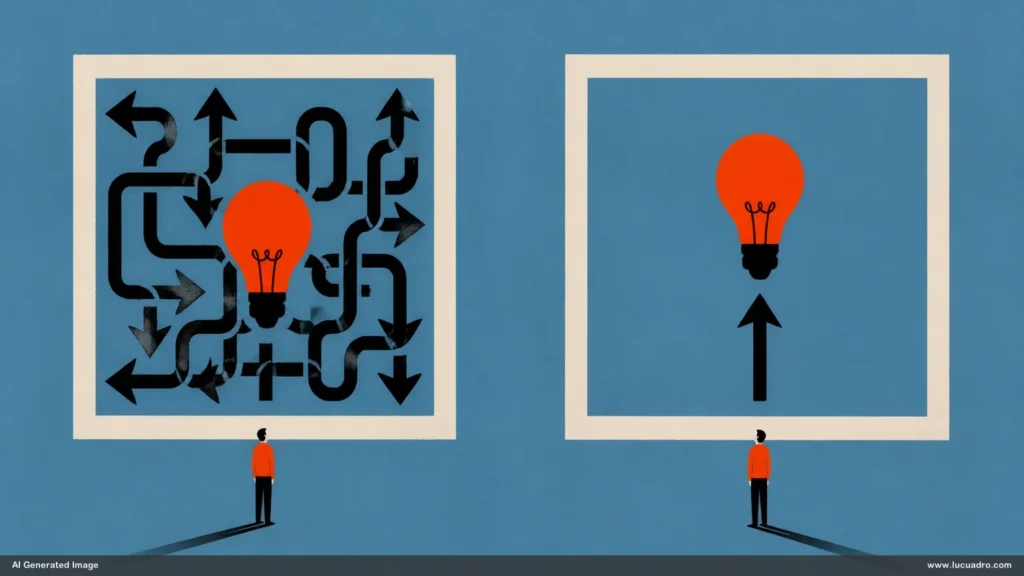
AI is strong at rewriting one meaning in several forms
Generative models are naturally good at paraphrase because language contains many ways to express similar relationships. A dense sentence can become a simpler one. A long paragraph can become a shorter explanation. A technical passage can be rewritten for a broader audience. A rough note can be turned into complete prose while keeping the original point intact.
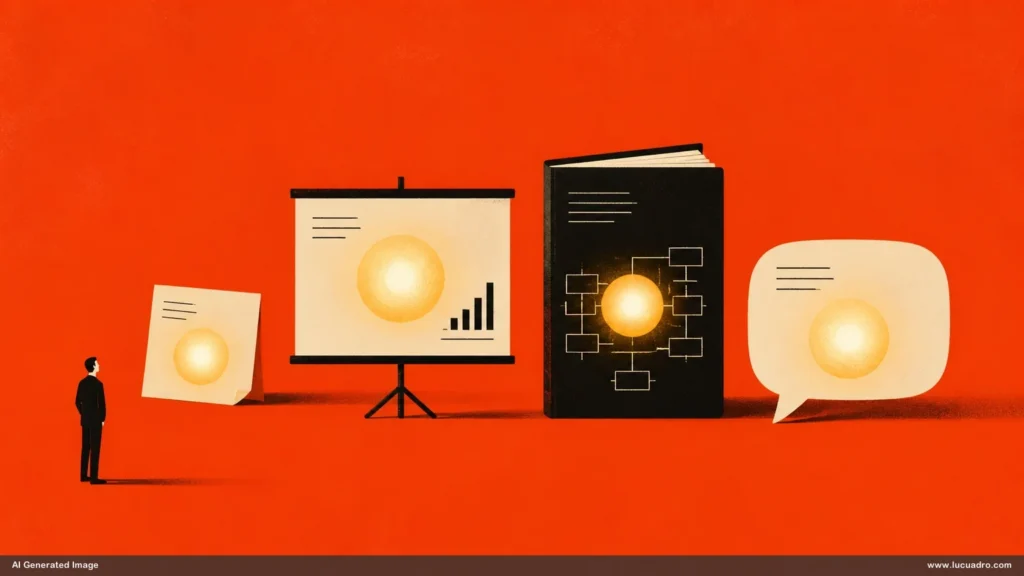
This flexibility is useful because clarity is contextual. The clearest version for a specialist may not be the clearest version for a customer. The clearest version for a slide may not work in a report. AI can reshape the expression around the audience and format while preserving the idea that needs to survive.
Removing unnecessary friction can make an idea feel stronger
Readers often judge an idea partly through the effort required to understand it. Repetition, vague nouns, long introductions, weak transitions, and overloaded sentences create friction before the reader reaches the substance. That can make a sound argument feel less convincing than it actually is.
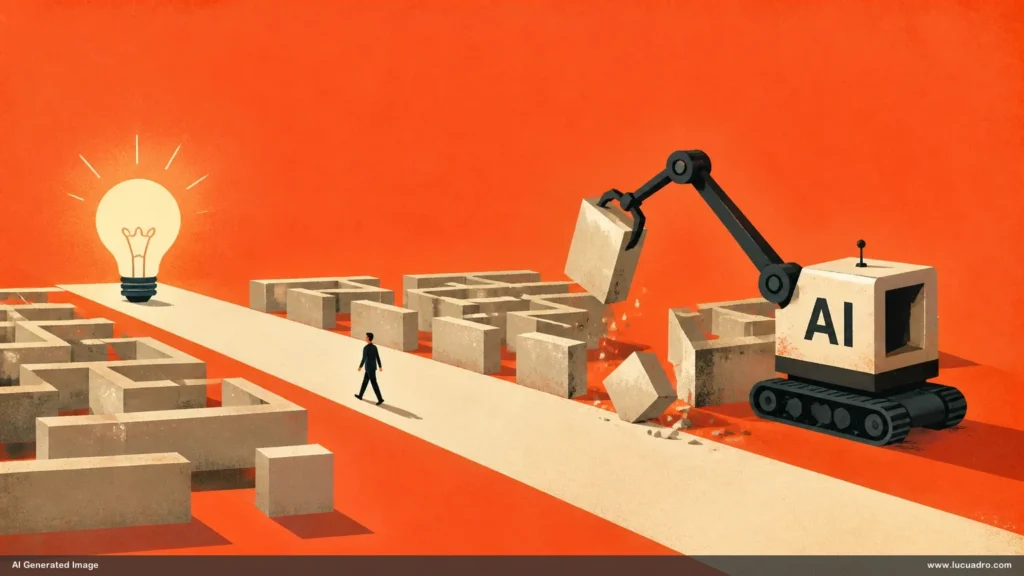
AI can identify and remove much of that friction. It can shorten setup, replace abstract wording with concrete language, split overloaded sentences, and bring important information closer to the beginning. The goal is not to make every piece of writing shorter. It is to reduce the distance between the idea and the reader’s understanding of it.
Preserving the core idea requires explicit constraints
Rewriting is not automatically faithful. If you simply ask AI to improve a passage, the model may strengthen a claim, soften a criticism, introduce a new example, remove a qualification, or change the tone in ways that affect meaning. The rewrite can sound better while becoming less accurate to the original intent.
The safest approach is to tell the model what must remain unchanged. You can specify that factual claims, conclusions, uncertainty, terminology, and level of confidence should stay intact while structure and wording improve. This turns editing into a constrained transformation rather than open-ended regeneration.
Comparing before and after versions makes changes easier to audit
Clarity editing works best when you can inspect what changed. Ask AI to produce a revised version and then summarize the substantive changes separately. If the goal was only clarity, there should be very few changes to meaning. This makes it easier to catch accidental additions or omissions before the new version is used.
That process connects to using AI to compare large amounts of information. The same comparison ability that helps across many documents can be applied to two versions of one passage, revealing where meaning stayed stable and where the rewrite drifted.
Clarity can improve without oversimplifying
There is a difference between making something easier to understand and making it less precise. Difficult subjects sometimes require complexity. A technical distinction, legal qualification, or important exception may be essential even if it makes the text slightly harder to read. Good editing preserves necessary complexity while removing unnecessary complexity.
This is where how AI explains ideas at different difficulty levels becomes relevant. You can simplify vocabulary and structure first, then ask what nuance was lost. The strongest version often combines accessible wording with the precision needed to keep the idea honest.
The same principle applies to visual communication
Visual clarity also depends on separating the core message from unnecessary friction. A composition may contain all the right information but fail because hierarchy is weak, spacing is inconsistent, focal points compete, or decorative elements distract from what matters. Improving the structure can make the communication feel more intelligent without adding new content.
AI can help critique those relationships, especially when it is given a concrete reference to inspect. It can identify where the eye lands, which elements compete, and what could be simplified. The visual idea stays the same while the presentation becomes easier to read.
Clarity is strongest when the idea survives the edit unchanged
Understanding why AI is so good at improving clarity without changing the core idea helps you use it as an editor rather than an author by default. Give it something worth preserving, define what cannot change, and let it improve structure, wording, sequence, and readability around that center.