
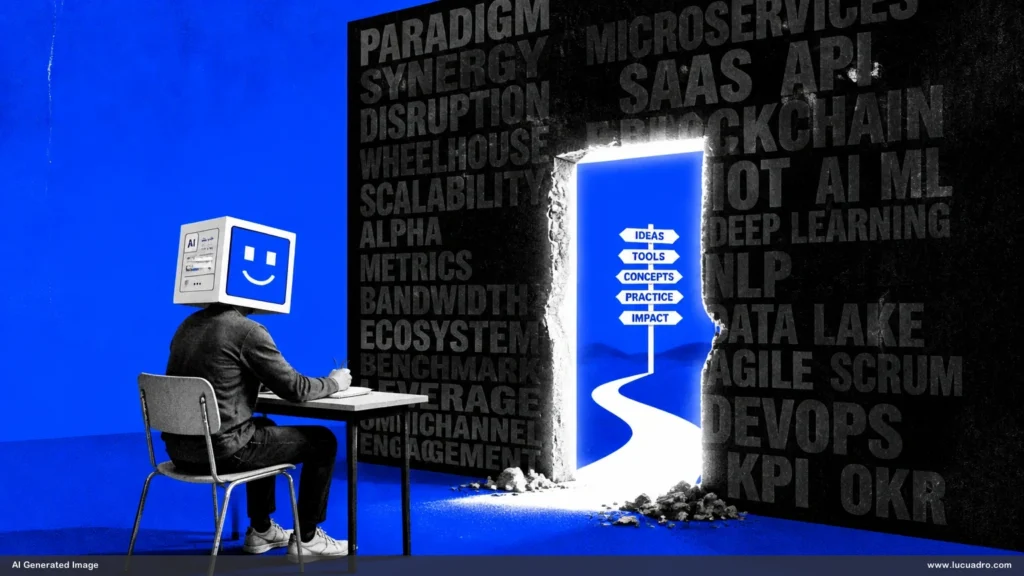
Why AI is such a powerful tool for learning new subjects is not mainly about getting faster answers. It is about reducing the friction that makes unfamiliar topics hard to enter. A new field often arrives as a wall of terminology, uneven explanations, hidden prerequisites, and too many possible starting points. AI can help organize that confusion. It can explain concepts at the right level, generate examples, answer follow-up questions, compare related ideas, and build a path through material that would otherwise feel disconnected.
AI lowers the cost of asking basic questions
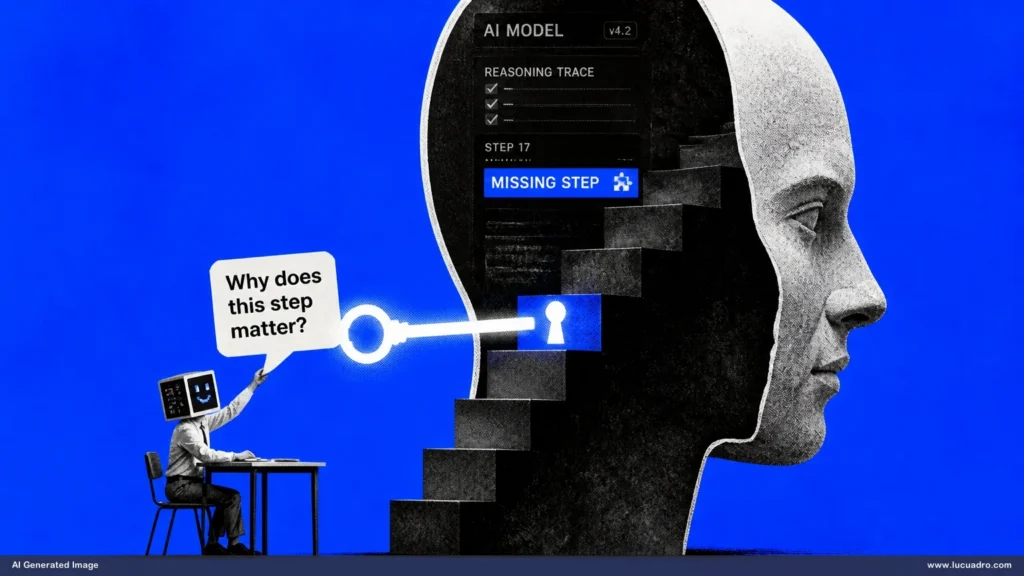
One of the biggest barriers to learning is not knowing what you are allowed to ask. Beginners often avoid simple questions because they sound obvious, repetitive, or embarrassing. In a book or lecture, the explanation keeps moving even when one step was unclear. With AI, you can stop at the exact point of confusion and ask for another explanation without social pressure.
You can ask what a term means, why a step matters, how two ideas differ, or what prerequisite you may be missing. That makes the learning process more interactive. Instead of pretending to understand and carrying confusion forward, you can resolve small gaps before they become larger ones.
AI can adapt explanations to your current level
Many educational resources fail because they are pitched at the wrong level. An expert explanation may be accurate but assume too much background knowledge. A beginner explanation may be easy to follow but omit the mechanism that actually matters. AI can bridge those levels by rewriting the same concept for different degrees of familiarity.
You can ask for a plain-language explanation first, then request a more technical version, then ask for the same idea through an analogy, an example, or a comparison with something you already know. This makes difficult material easier to approach progressively instead of forcing you to choose between oversimplification and overload.

AI makes it easier to build a map before studying the details
New subjects are difficult because you do not yet know how the pieces relate. You may recognize individual terms but have no mental model for which concepts are foundational, which depend on others, and which can be ignored at the beginning. Without that map, reading becomes a sequence of disconnected facts.
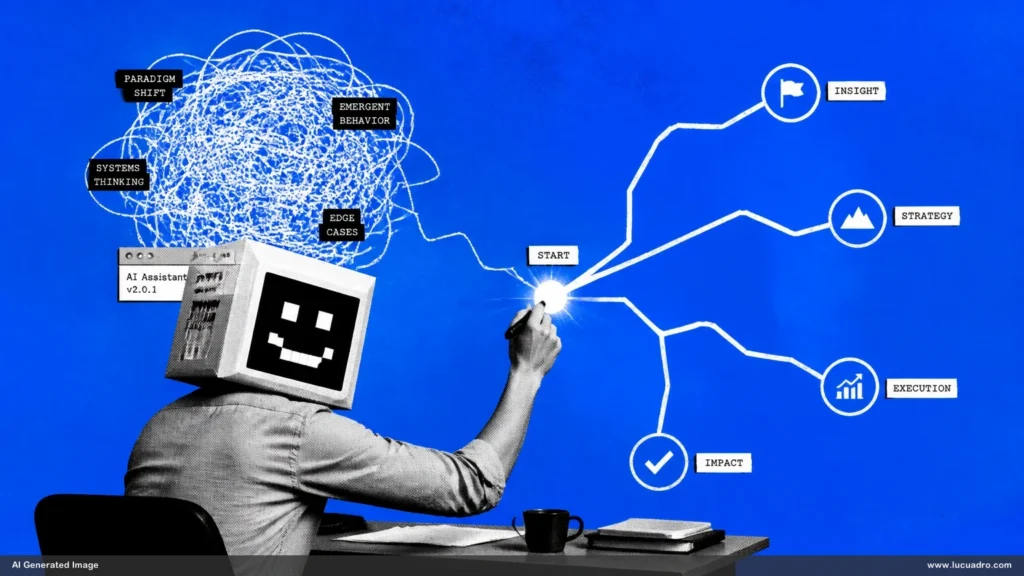
AI can help create an initial structure. Ask for the major concepts, how they connect, what a beginner should understand first, and which topics can wait. The result should not be treated as a definitive curriculum, but it can give you a working map. Once the structure exists, new information has somewhere to attach.
Examples make abstract ideas easier to understand
Definitions often sound clear until you try to use them. A concept may make sense in general language but remain difficult to recognize in practice. AI is useful because it can generate fresh examples immediately and adjust them to the domain you care about. A statistical idea can be explained through marketing, sports, manufacturing, or everyday decisions rather than through one textbook example.
This flexibility matters because examples are not decoration. They show what a concept looks like when applied. You can also ask for counterexamples, borderline cases, or two examples that look similar but belong to different categories. Those comparisons help turn verbal understanding into something more operational.
AI can connect new knowledge to what you already understand
Learning becomes easier when unfamiliar material is connected to an existing mental model. AI can ask what you already know and then explain the new subject through those reference points. Someone familiar with spreadsheets might learn database concepts through rows, columns, and relationships. A designer might understand machine-learning training through examples, variation, constraints, and selection.
This is one reason using AI to explore different perspectives can help learning. The same concept can be reframed through several viewpoints until one representation clicks. Different explanations are not necessarily competing explanations. They can be different access points into the same underlying idea.
Learning improves when AI turns passive reading into active retrieval
Reading an explanation and recognizing it is not the same as being able to recall or apply it. AI can make study more active by generating questions, asking you to explain a concept back, creating practice scenarios, or presenting a problem without immediately revealing the answer. That forces you to retrieve and use the material rather than merely reread it.
You can also ask the model to increase difficulty gradually or target the areas where your explanation was weak. The important point is that the learner still has to do the thinking. If AI answers every question before you attempt it, convenience can replace practice instead of supporting it.
AI is a learning accelerator, not an authority
There is an important limitation. A model can explain something clearly and still be wrong, incomplete, or outdated. Fluent explanations are especially dangerous in unfamiliar subjects because you may not yet have enough knowledge to notice the error. Important claims should still be checked against reliable sources, especially when the subject has practical consequences.
That is why AI can sound certain when wrong matters so much in learning. AI is excellent at helping you enter a field, clarify concepts, and create practice. It is less suitable as the sole authority on what is true.
The strongest learning use is interactive structure
Understanding why AI is such a powerful tool for learning new subjects helps you use it as more than a fast answer machine. It can lower the barrier to basic questions, adjust difficulty, build concept maps, generate examples, connect ideas, and create active practice. Those capabilities make unfamiliar material easier to approach without removing the need for verification.