
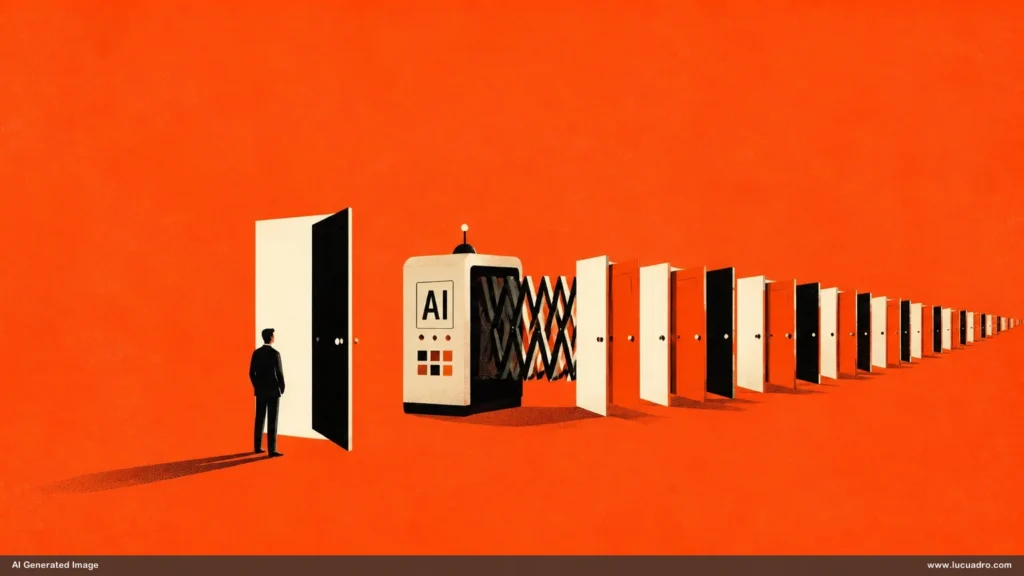
Why AI is such a powerful tool for generating alternatives becomes obvious when you look at how much creative and analytical work depends on producing more than one possible path. People often stop at the first acceptable idea because generating additional options takes time and attention. AI changes that constraint. It can create many variations quickly, making it easier to compare approaches, test different framings, and avoid committing too early to the first solution that appears workable.
Generating alternatives is a different task from choosing the best one
Ideation and judgment are often treated as one process, but they are not the same. Producing ten possible headlines is different from deciding which headline fits the audience. Creating six layout directions is different from selecting the one with the clearest hierarchy. Listing several explanations is different from knowing which one is most accurate or useful.
AI is particularly strong on the first side of that divide. It can expand the option set rapidly because variation is closely aligned with how generative systems work. Once the possibilities exist, you can apply human judgment, evidence, constraints, or performance data to decide which deserve further development. Separating generation from selection prevents the model’s speed from being confused with decision quality.
AI reduces the cost of exploring more than one direction
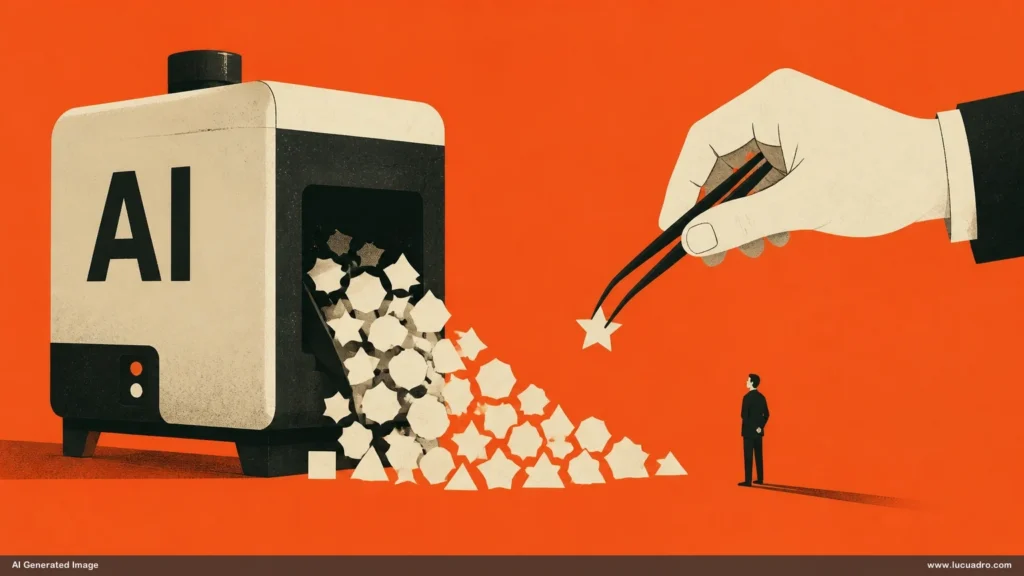
Without AI, every additional option has a production cost. Another email angle requires another draft. Another visual direction requires another sketch. Another explanation requires another pass through the material. That cost encourages premature convergence, where you accept a reasonable first answer because exploring five more possibilities does not seem worth the effort.
AI lowers that cost dramatically. You can ask for several contrasting approaches before investing heavily in any one of them. This is valuable because the best alternative is often not the obvious extension of the first idea. More options increase the chance of finding a framing, structure, or combination that would not have appeared through a single linear attempt.
Useful variation requires dimensions, not just quantity
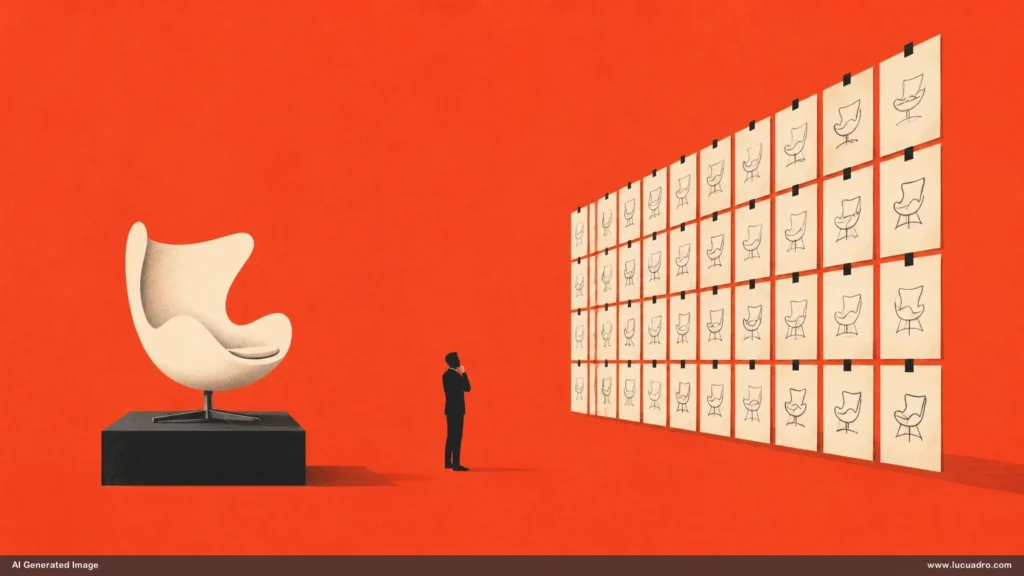
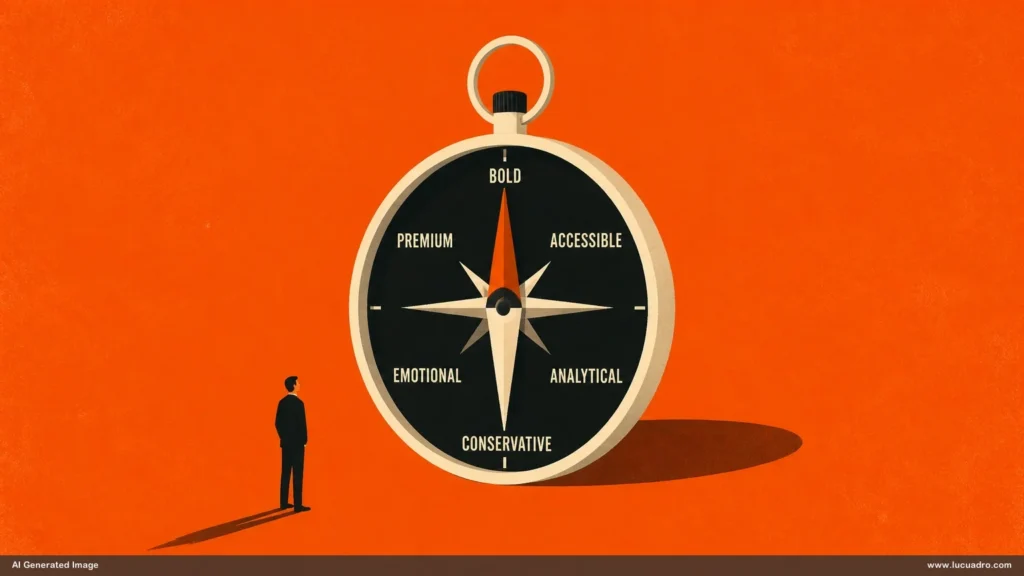
Asking for twenty ideas does not guarantee meaningful diversity. Generative AI can easily produce cosmetic variations that differ in wording while sharing the same underlying concept. Better results come from specifying the dimensions along which the alternatives should differ. You might ask for conservative versus bold approaches, emotional versus analytical framing, visual versus verbal explanation, premium versus accessible positioning, or short-term versus long-term solutions.
This turns alternative generation into a structured search rather than a volume exercise. The model is no longer trying to produce more examples of the same pattern. It is being asked to explore different regions of the solution space. That distinction is important because ten genuinely different approaches are usually more valuable than fifty surface-level rewrites.
AI makes comparison easier because the options can share a common frame
Alternatives become more useful when they are comparable. If every option is written at a different level of detail or optimized for a different goal, selection becomes difficult. AI can generate alternatives inside a fixed structure, keeping length, criteria, audience, or format consistent while changing the strategic direction.
This connects naturally to using AI to compare large amounts of information. The same system that generates options can also normalize them into a common frame, highlight meaningful differences, and expose where two alternatives are actually variants of the same idea. That makes the generation stage easier to turn into a real decision process.
Alternatives are especially valuable when the problem is underspecified
Some tasks are difficult because the goal is clear but the path is not. You may know that a presentation needs to feel more premium without knowing whether the answer is stronger typography, more negative space, better imagery, a different sequence, or tighter visual hierarchy. You may know a campaign angle feels weak without knowing whether the issue is audience, offer, proof, or framing.
AI can help expose the hidden choices by generating different interpretations of the problem. Instead of forcing one answer immediately, it can show several plausible directions. This is useful because the act of comparing alternatives often clarifies what you actually care about. The options become diagnostic tools as much as possible solutions.
References make alternative generation more controlled
Open-ended variation can drift. If you ask for alternatives without anchors, the model may change details you wanted to preserve. Strong references, source material, constraints, and examples define what should remain stable while the alternatives vary around selected dimensions. This is especially important in visual work, where uncontrolled variation can change composition, subject identity, brand treatment, or style all at once.
That is why reference images for AI image generation are so useful. A reference can preserve the core while AI explores alternatives around pose, framing, environment, lighting, layout, or treatment. The result is more like directed variation and less like repeated reinvention.
The real advantage is faster search through the solution space
The strongest way to think about AI-generated alternatives is not as automatic creativity. It is as cheaper search. You can explore more candidate solutions before committing resources to execution. You can test different framings, reveal hidden assumptions, discover combinations, and compare several paths while the cost of changing direction is still low.