
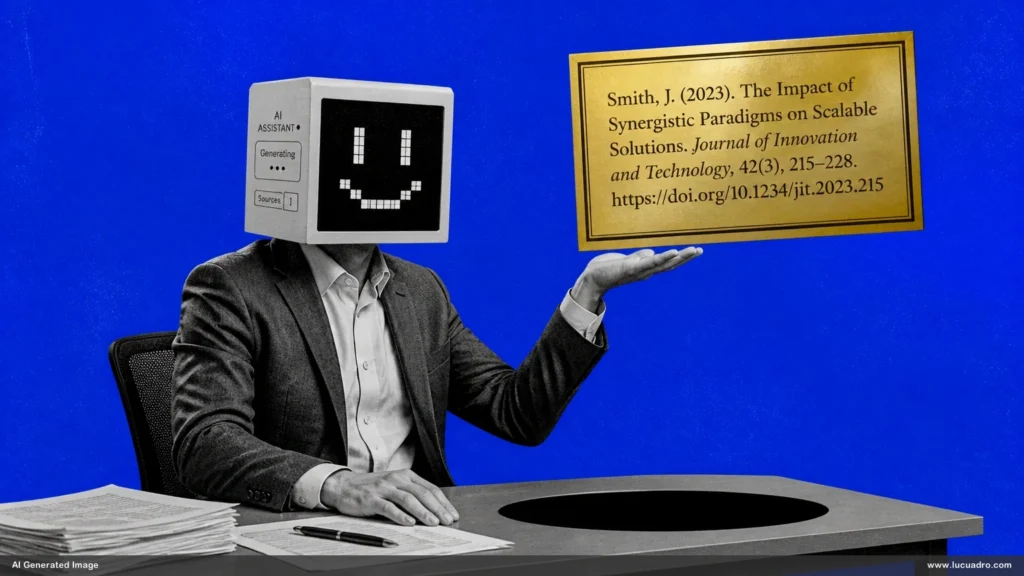
Why AI-generated citations need to be checked comes down to a simple distinction: a citation can look correct without being verified. A language model can produce author names, article titles, journals, dates, and links in convincing scholarly form because it has learned what citations usually look like. That formatting ability is not the same as confirming that the source exists, says what the model claims, or is the best evidence for the point.
A citation-shaped answer is not automatically a real source
Generative AI is very good at producing structured language. If you ask for academic references, it can assemble names, dates, titles, and publication details into a format that resembles a legitimate citation. The result may look completely normal.
The problem is that plausibility and existence are different. A source can sound like something that should exist without actually existing. A title can fit a known researcher’s field. A journal name can sound authentic. A date can look reasonable. None of those signals prove the reference is real.
Models can blend real fragments into a false reference
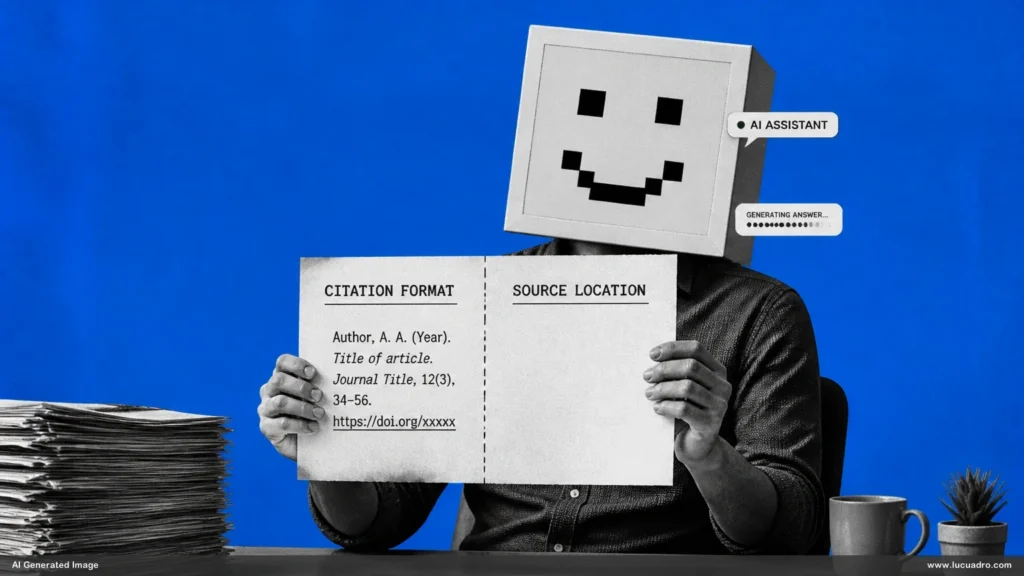
Some citation errors are not pure invention. A model may combine a real author with the wrong article title, attach a correct title to the wrong journal, or merge details from several related sources into one convincing but nonexistent record.
This can be harder to catch than an obviously fake citation because every component feels familiar. The reference looks plausible precisely because it is built from genuine-looking parts. Verification has to test the complete source, not just whether individual names or phrases seem recognizable.
A real source can still be cited for the wrong claim
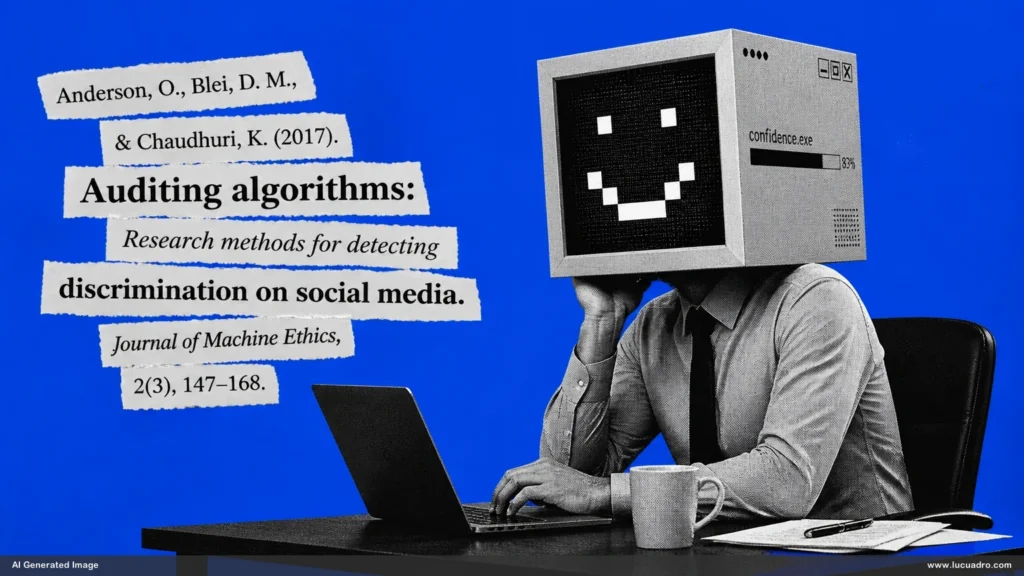
Finding the source is only the first check. The next question is whether it actually supports the statement. A paper may exist but discuss a different population, use a different definition, or reach a more limited conclusion than the AI summary suggests.
This matters because models often compress nuance. A cautious finding can become a broad claim. A correlation can be presented as a cause. A discussion section can be mistaken for a demonstrated result. Citation accuracy therefore has two layers: the source must exist, and the source must support the claim being made.
Model memory is not the same as source retrieval
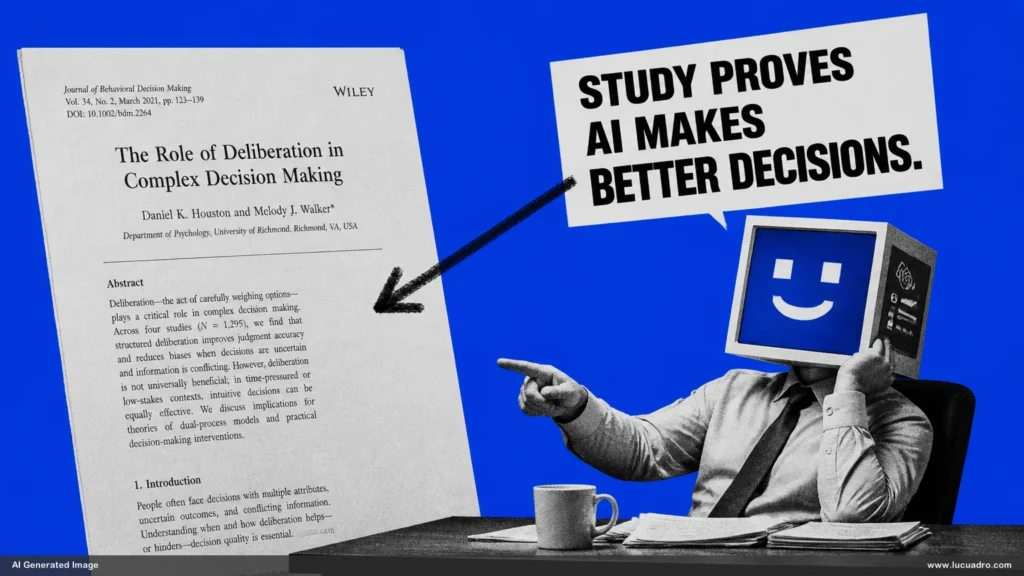
When an AI answers from its learned knowledge alone, it usually is not opening an original source and checking the exact passage before responding. It is generating from learned associations. That makes detailed citation reconstruction risky.
This is closely related to why training data is not a giant searchable database. A model may have learned information influenced by a source without retaining a clean, retrievable record of that source and its exact metadata.
Current sources create an additional problem
Even a model with strong general knowledge may not know whether a paper was corrected, a webpage moved, a report was replaced, or a newer source became available. Citation tasks often depend on information that changes after training.
If the answer needs current references, retrieval becomes essential. Search or database access can locate the source as it exists now, while model memory alone cannot reliably establish current publication status.
Working links are not enough
A live URL can create false confidence. The link may lead to a real page that only loosely relates to the claim. It may point to a secondary summary when the original source is required. It may even resolve correctly while the title, author, or publication date in the generated citation is wrong.
Verification should therefore include the destination, metadata, and claim support. A citation is useful because it lets another person inspect the evidence. If the reference does not lead cleanly from claim to source, the citation has failed even if the link technically works.
Direct retrieval makes citation work much safer
The strongest workflow asks the AI to work from sources it can actually access. That may mean searching a database, opening a paper, using a provided document, or retrieving a webpage before generating the citation.
This is another example of why AI becomes more powerful when it can use tools. Retrieval changes the task from reconstructing a likely source to inspecting an actual source.
Verification should match the consequence of the claim
Not every citation needs the same level of checking. A casual reading list may tolerate a quick existence check. An academic paper, legal argument, medical document, financial report, or public claim requires much more careful verification.
The more consequential the statement, the stronger the evidence chain should be. That can include opening the source, confirming authorship and date, reading the relevant section, checking whether the result was summarized accurately, and identifying any important limitations.
AI can still help with citation work when the workflow is grounded
AI is useful for formatting references, organizing bibliographies, extracting metadata from documents, comparing citation styles, and summarizing source material that has actually been supplied. Those are bounded transformations with visible inputs.
The risk rises when the model is asked to produce references from memory with no retrieval step. The safest role for AI is often to process verified source material rather than invent the source list from scratch.
Citations are evidence links, not decorative footnotes
Understanding why AI-generated citations need to be checked changes how you evaluate research-looking output. A polished citation is only useful if the source exists, the metadata is correct, and the evidence actually supports the claim. Formatting is the easiest part of citation work. Verification is the part that gives the citation value.